


Annual Report 2020
OUR VALUES

Integrity
We are honest, ethical and trustworthy. We always take responsibility for our decisions, actions and results. We appreciate and respect other people’s thoughts, feelings and background.
We are proud of what we do and stand up for what is just and right.

Passionate
We are passionate and we love new challenges.
We value our performance-driven culture where we all work together to reach new milestones. We know our goals and constantly strive to reach new heights.
We are hard-working individuals that reach great heights when working together.

Trust
We believe and act with equality.
We achieve greatness through teamwork.
We operate with transparency.
We are committed to building an encouraging, caring and supportive environment.
We value the talent, time and intentions of everyone we work with.

Perseverance
We establish goals, create plans and execute them.
We are determined to work hard and deliver results.
We are persistent in our work

Meticulous
We get it right by being rigorous.
We set high standards. We execute on the details.
We take pride in our work, and never settle for anything but the best.
DIRECTOR’S WELCOME NOTE

Kenneth Farrugia
Director
Welcome to the 2020 FIAU annual report. 2020 will certainly be a year to remember and which will go down in history as the year of Covid-19. The pandemic challenged each and every one of us in multiple ways and on so many different levels, be they personal or professional, and for many, both.
Following on the successes in 2019, where the FIAU rose to the challenges of the various evaluations and took the feedback and recommendations on board to change, improve and grow; the pandemic presented a whole new set of challenges. The need to adapt our work practices, particularly in the conduct of our supervisory work, and also our guidance and outreach, certainly presented a challenge. The necessity to keep working to fight crime and safeguard Malta’s reputation whilst also keeping our staff safe, have been an ongoing process. Various measures have been put in place and we continue to adjust as the situation evolves. At the outset, I want to thank all my colleagues at the FIAU for their determination and support.
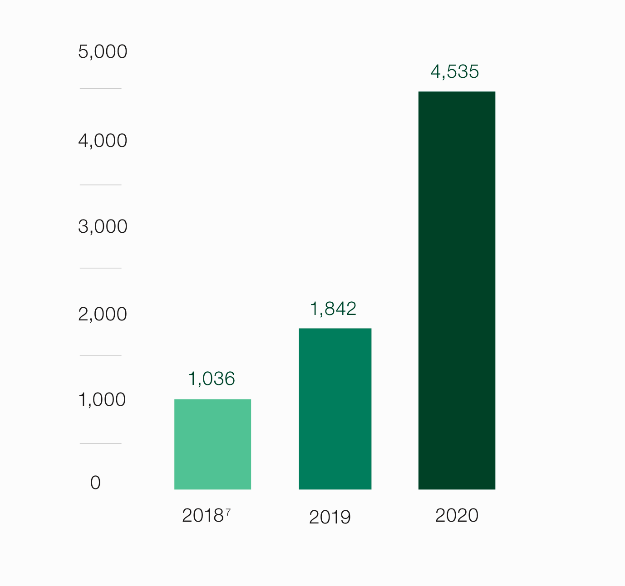
Despite the pandemic, 2020 was a ground-breaking year in several ways here at the FIAU. During the year, a record number of suspicious reports were filed by subject persons (more than 5,100), and the Unit shared more than 4,000 intelligence reports with national and international authorities that are engaged in the fight against money laundering and funding of terrorism.
With regards to Anti-Money Laundering and Counter Funding of Terrorism (AML/CFT) supervision, the FIAU carried out more than 200 examinations with the support of the Malta Financial Services Authority (MFSA) and the Malta Gaming Authority (MGA). In general, we have seen a greater level of awareness of AML/CFT requirements, and significant improvements in compliance have been observed. While the FIAU strives to engage with subject persons to take remedial action to strengthen their AML/CFT programme, there were a number of occasions when the FIAU concluded that the application of a pecuniary penalty for breaches of AML/CFT regulations was warranted.
During 2020 a number of objectives were reached, one of which was the successful set up and launch of the Centralised Bank Account Registry (or CBAR) in line with the requirements of the Fifth European Anti Money Laundering Directive (5th AMLD) together with the relevant legislation and guidance documents. The Intelligence Analysis Section has been provided access to this database, and it is of particular assistance in reducing the timeframes for accessing financial information and processing suspicious reports.The FIAU also launched goAML, a specialised IT tool which was developed by the United Nations Office on Drugs and Crime specifically for use by Financial Intelligence Units (FIUs).
Both systems were rolled out in line with our 2020 plans and following extensive development, customisation and testing. The year was also characterised by continued growth of our human resources, with our staff complement increasing from 70 as at the end of 2019 to 98 by the end of 2020. Our projections are for staff to increase up to 157 by the end of 2021. To accommodate this growth in human resources the FIAU will be moving to new and larger premises in 2021.
As can be clearly seen when reading about the work carried out by the FIAU in this report, despite the pandemic, the FIAU continued with its operations, communications and engagement with subject persons. The FIAU, including in collaboration with other stakeholders, trained over 3,000 individuals from across our subject persons. Written communication, in the form of newsletters, guidance notes, fact sheets and updates, became the key strategy for communication.
As we look back on 2020 and take stock of our achievements, we cannot ignore that 2021 will present us with one of Malta’s biggest challenges yet, the outcome of the Financial Action Task Force’s assessment on the implementation of the MONEYVAL
recommendations. Here at the FIAU, we have worked tirelessly to ensure that those recommendations falling within our remit are addressed and effectively implemented, whilst we continued to work hard towards ensuring that we perform our functions and duties in an efficient and effective manner. This year will also see the full impact of the new functions entrusted to the FIAU, with the continuation of the building of the CBAR team and the functioning of the system, and the implementation by the FIAU of the newly introduced cash restriction regulations.
No doubt, 2021 will continue to present challenges, both due to Covid-19 and its impact still being at play, and in relation to the effective exercise of all the functions of the FIAU, its being not only a financial intelligence unit but also an AML/CFT supervisory authority. I am however confident that we will continue to perform and improve. Not least, because of the team here at the FIAU. It is true that bigger budgets, new technology and more resources have given us the necessary tools to work and to address areas that required improvement, but our most important asset has proven to be our people. I am proud to be able to say that year on year, no matter what, the team at the FIAU has risen to the occasion and faced each challenge presented, with passion, determination, commitment and loyalty.
These qualities have proven to be our best tools to carry out our mission, very often in silence, as the nature of our work and our legal obligations demand. For this, I thank all members of staff who have undoubtedly contributed to the success of the FIAU throughout 2020. To have a team which believes strongly in our purpose to protect Malta from financial and organised crime; to ensure that our economy and country remain on the right side of the law in relation to Money Laundering and Funding of Terrorism; is something to be truly proud of and grateful for.
I would also like to thank the Ministry for Finance and Employment for its ongoing faith and support, and all the authorities and entities we collaborate with, nationally and internationally, and who support us to make sure we can do our job effectively. There are too many to mention, but we are truly indebted. On this final note, I would like to invite you to read our annual report and allow its pages to speak for themselves.
Kenneth Farrugia
Read more
Our staff
OUR PURPOSE
The FIAU’s mission statement found at the very beginning of the annual report talks of perseverance, fighting crime, independence and integrity. These are powerful words that belie so many other values the FIAU holds dear such as passion, commitment, determination and being driven to succeed; but more significantly they point clearly to the importance of what we do and how we do it.
The Unit is often associated with the words ‘watchdog’, ‘regulator’, ‘fines’ and ‘compliance’, which are certainly true, but they are only part of who we are and our story. They do not do justice to the purpose of why we do what we do. Our Purpose goes far beyond regulation and supervision. Our Purpose is to combat crime and protect Malta, its economy and society. The aim of the FIAU is not to be a disciplinarian, but an educator and an enabler to subject persons. The primary aim of our engagement with subject persons is to assist them to do their part in preventing money laundering. This complements our intelligence analysis function. Supervision and intelligence analysis together with guidance and outreach are the means at our disposal to achieve our purpose, which goes beyond simply fighting money laundering and funding of terrorism.
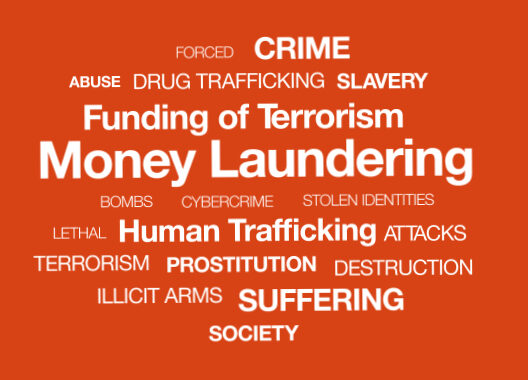
Too often, our work seems not to be fully understood; the value of what we do and why we do it, is not always clear. Money laundering is often seen as some abstract crime, with no victims on the ground and of no consequence to the individual. It is not perceived with the same horror as terrorism, and the process many times takes the form of what appear to be normal financial and commercial transactions. The reality, however, is entirely different. Money laundering is not a victimless crime. Apart from undermining the integrity of the financial system, the wellbeing
of the economy and a country’s reputation, leaving society at large as the victim; money laundering thrives at the expense of the persons and individuals who are the victims of crime. The fight against money laundering therefore is also a fight against all crimes that generate profit; the so-called predicate crimes from where the money being laundered derives. To understand and appreciate why we do what we do, one needs to understand the seriousness and the consequences of these crimes. Only when one understands that these crimes leave real victims, individuals who suffer, whether physically or financially, will one understand why it is important not only to punish the perpetrators of these crimes but also to prevent them from enjoying the fruit of their crime and to punish whoever tries to hide the criminal origin of illicit funds. This is the real purpose of the FIAU and why we fight money laundering with passion and determination.
The predicate crimes
The victims on which money laundering thrives are often hidden, but once you understand what the predicate crimes are, the faces begin to emerge and sometimes they are closer to home than one would care to think. These are often the victims of organised crime, drug traffickers, fraudsters, murderers, unscrupulous and corrupt individuals. The more money laundered, the more profitable their crimes become, the more crime they commit and the bigger the number of victims. Ultimately society in general becomes the biggest victim.
This list of predicate crimes identified by the FIAU is long and below are some of the crimes that give rise to and are further supported by money laundering, and it is in no way exhaustive:
• Drug trafficking
• Fraud
• Tax crimes1
• Organised crime
Read more

The International Monetary Fund (IMF) set a conservative estimate that as at 2018 around 5% of the Global Gross Domestic Product was laundered money”
• Bribery and corruption
• Human (including child) trafficking and slavery
• Human smuggling
• Illicit arms dealing
Once a name or a face is put to a crime, it becomes immediately evident that money laundering is not a victimless crime. On the contrary the victims are many, persons and individuals who suffer physically or financially; as well as society in general that loses out on the benefits of a healthier economy as a result of money laundering.
The consequences of money laundering
The International Monetary Fund (IMF) set a conservative estimate that as at 2018 around 5% of the Global Gross Domestic Product was laundered money. It stands to reason that since this has increased from 3.6% in 2009 (UNODC), the trend unfortunately is on the rise. It is a conservative estimate because due to the illicit nature of the transactions, it is impossible to measure the exact magnitude of the problem and formulate precise statistics. Either way, this figure still translates into billions if not trillions of euro flowing through the world economy.
This is of grave concern given the consequences it has and the threats it poses to the economy of the country and to society. The underlying predicate crimes as listed above, along with the intent to hide their proceeds, create financial flows away from economically and socially productive uses. This money flowing away from the system can have a negative impact, particularly on the financial sector and its stability, and diverts funds away from the legal infrastructure of an economy.
Financial resources from a legal economy,
such as taxes that would normally be invested in the country and the wellbeing of its citizens, such as in healthcare and education, are instead diverted elsewhere due to tax crimes.
The financial industry is particularly vulnerable to being used to launder money. This sector is of critical importance to Malta’s economy and it is why the FIAU has stepped up the pace of supervision, enforcement, and guidance and outreach. The awareness that the laundering of large amounts of illicit funds through the financial and professional services sectors fuels further crime and undermines the integrity of Malta’s financial system and international reputation, and threatens Malta’s national security and prosperity, is what drives the FIAU forward. The Financial Action Task Force (FATF), the body formed in 1989 to drive the development, as far as possible, of a common approach around the globe to fight money laundering and the funding of terrorism, states that the possible social and political costs of money laundering, if left unchecked or dealt with ineffectively, are serious. Organised crime can acquire control of sectors of the economy through investment, and infiltrate or influence financial and other institutions, with the risk that the balance of power can be tipped in the wrong direction.
This is why there is much more to the FIAU’s purpose other than what appears at face value as the prevention of money laundering. The FIAU plays its part in trying to keep Malta clean and the people who live here safe. Malta can then be seen as a reputable jurisdiction worth investing in, therefore creating opportunities for current and future generations. The FIAU cannot achieve this on its own, however it plays its part with perseverance and determination, with integrity and independence, without looking at faces, as has been evident on more than one occasion and as was acknowledged by MONEYVAL in its 2019 report. This is why we continue to strengthen our work in supervision, enforcement where necessary, intelligence, training and outreach. These are our tools to achieve our purpose.
Four steps to money laundering
HOW DO WE ACHIEVE IT
Intelligence Analysis
The Intelligence Analysis function of the FIAU
The Financial Action Task Force (FATF) Recommendation 29 and its respective interpretative note require countries to establish a Financial Intelligence Unit (FIU) that serves as a national centre for the receipt and analysis of:
a. Suspicious Transaction Reports; and
b. other information relevant to Money Laundering (ML), associated predicate offences and Funding of Terrorism (FT), and for the dissemination of the results of that analysis.
Furthermore, an FIU should be able to obtain additional information from reporting entities and should have access on a timely basis to the financial, administrative and law enforcement information that it requires to undertake its functions properly.
In line with FATF Recommendation 29, the EU Anti-Money Laundering and Counter Funding of Terrorism Directives, as well as Article 16 of the Prevention of Money Laundering Act (PMLA), the FIAU’s analytical function is carried out by the Intelligence Analysis section. The role of the section consists of collecting, processing and analysing information obtained from various sources. The information collected leads to its dissemination to be used as intelligence to combat ML and the FT.
The main source of information is the submission of Suspicious Transaction Reports (STRs) by reporting entities, as well as the ensuing requests for information from various sources, including persons subject to the Prevention of Money Laundering and Funding of Terrorism Regulations (PMLFTR) and foreign counterparts.
Once a suspicious report is received, several preliminary checks are carried out by a dedicated team tasked with establishing whether the FIAU already holds any intelligence on the subjects reported. At this stage, the suspicious report is also assessed to determine whether the elements surrounding the suspicion being reported require further analysis. In addition, the report is analysed to see whether any of the information received by the Unit should be disseminated to other domestic supervisory and competent authorities or foreign FIUs for intelligence purposes, and to determine the urgency of any such disseminations.
Reports which form part of an in-depth analysis are handled by other dedicated teams within the Section. Once this in-depth analysis is concluded, the findings are presented to the Financial Analysis Committee (FAC), which is an internal Committee within the FIAU. This Committee determines whether reasonable grounds exist to conclude that ML/FT has been, is being or may be committed and if the FIAU is required to take further action. In those cases where the FAC concludes that there is a reasonable suspicion of ML/FT, a detailed analytical report is drawn up and disseminated as required for further investigation.
The main achievements of the section during 2020 include:
• increase in staff complement
• singnificant resuction in the analytical timeframe
• successful implementation of goAml (more information on this is available in
the 'goAML Implementation' section of this report) and other technological advancements
• enhanced cooperation with domestic and international counterparts
• increase in strategic interlligence products
• increase in disseminations to competent authorities and foreign counterparts
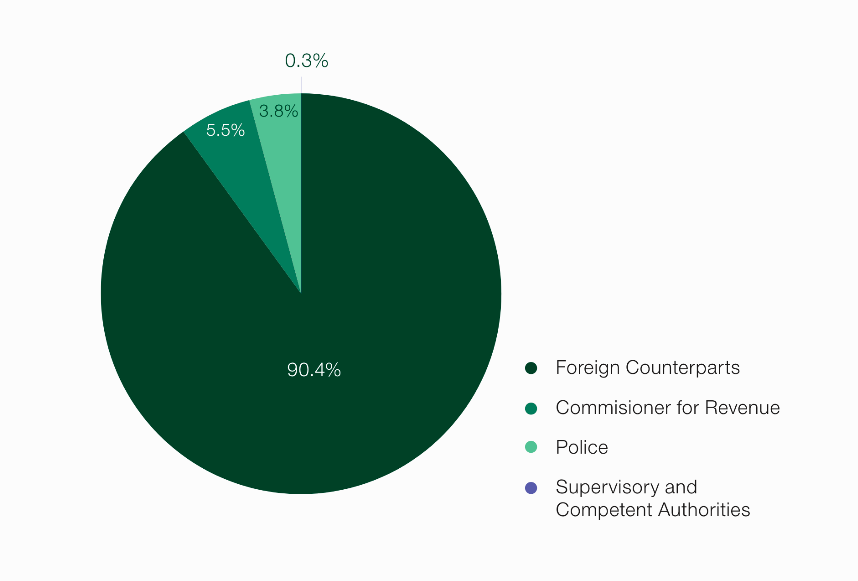
The FAC may at times determine that a spontaneous intelligence report needs to be sent to a foreign FIU, or to the supervisory and competent authorites.
The FIAU has wide and far-reaching powers granted to it by law to have access to any information which is deemed to be relevant and necessary for it to perform its functions at law. These powers1 emanate mainly from Article 30, Article 30A and Article 30B of the PMLA and Regulation 15(8) of the PMLFTR.
In addition to carrying out operational analysis as described above, the FIAU is tasked with carrying out strategic analysis on available and obtainable data and information. Such strategic analysis can help identify ML/FT threats and vulnerabilities at sectoral and national level, as well as any trends, patterns, and typologies in this regard. The results of these exercises can inform the goals set by the Unit by raising sector specific and by identifying changes that may need to be made to the policies and overall AML/CFT regime.
Intelligence Analysis Section: 2020 at a glance
The year 2020 was a challenging year for all of us, nationally and globally. During the year, the Intelligence Analysis Section dedicated its efforts to improving its operations and reaching its targets as laid out in the national MONEYVAL2 action plan. Despite the unprecedented obstacles posed by the global pandemic caused by Covid-19, the section managed to achieve what it set out to do. In addition to the significant increase in human resources, the Intelligence Analysis Section has also improved its IT systems, having implemented the goAML system in June 2020, gained access to the newly established Centralised Bank Account Registry (CBAR), as well as subscribed to a number of other intelligence databases.
The actions taken so far by the Section have already yielded significant and positive results. The changes which started taking place during the period January 2019 to September 2019 contributed to a reduction in the analytical process.
goAML Implementation
In June 2020, the Unit replaced the STR Submission System and internal database with goAML, a fully integrated software solution specifically developed for Financial Intelligence Units (FIUs) by the United Nations Office on Drugs and Crime (UNODC). With the introduction of goAML, the setting up of dedicated workflows for different tasks was necessary.
The implementation of goAML means that data is not only collected in a more effective way but is also analysed through a more efficient process, with subject persons able to upload any supporting documents to the software itself both when submitting reports and when replying to requests for information.
Certain databases the FIAU previously had separate access to have since been integrated within the goAML software. The data enrichment functions of goAML have allowed the FIAU to optimise the process through which certain checks are carried out. In addition, goAML has helped improve the communication flow between the FIAU, subject persons and stakeholders, given that all requests for information and disseminations, including to the Malta Police Force (MPF), now take place using goAML.
Increase in disseminations and enhanced cooperation with domestic authorities
The FIAU’s Intelligence Analysis Section shares intelligence on a regular basis with the MPF as well as with domestic supervisory and competent authorities, a process which has been facilitated further through the implementation of goAML. Since the implementation of goAML in June 2020, the FIAU has assisted in over 2,100 requests for assistance submitted by national supervisory entities and other competent authorities.
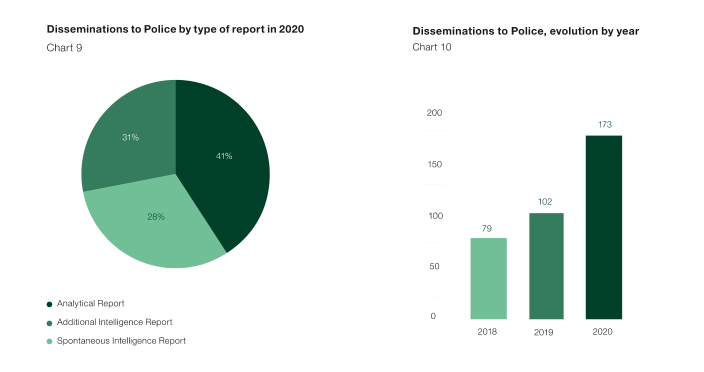
During the year under review, the FIAU also shared over 70 analytical reports with the police. These consisted of reports which were drawn up following an in-depth analysis carried out by the FIAU and which, when analysed, were deemed to have a reasonable suspicion of ML/FT. In addition to these analytical reports, the FIAU also shared over 100 other disseminations with the MPF. These disseminations consisted of additional intelligence reports3 and so-called spontaneous intelligence reports4.
Strategic analyses and public-private partnerships
In 2020, a dedicated team was established to carry out strategic analysis. To perform their task, the team uses different sources at its disposal, from intelligence held in the FIAU’s own database to information requested from other sources, including subject persons, authorities and foreign counterparts.
Eight strategic analyses were carried out and completed during 2020, whilst several projects will be continuing in the first half of 2021, together with other projects planned throughout the year.
The completed projects covered various areas of interest including cash usage, tax crimes, corruption and bribery, international elements and remote gaming.
While the results of some of these strategic analyses were applicable to national supervisory and competent authorities, the results of some were distributed to the public. In such instances these were made available on our webpage.
In addition to embarking on a number of strategic analyses, the FIAU also engaged in three separate operational public-private partnerships. Two of these were carried out with members of the banking sector, while the third involved remote gaming operators. All three analyses are still ongoing with two nearing completion.
General statistical information
Reports submitted by reporting entities
Following the implementation of goAML in June 2020, the FIAU was able to receive different report types, which is useful for the identification and processing of higher priority reports.
As was the case in previous years, 2020 saw yet another new record in the number of submissions made by subject persons.
An increase in reporting has also been noted in most sectors since the implementation of goAML, as evidenced in Table 1.
Read more
Total Suspicious Transaction Reports in 2020
Chart 1
Quality of reports
The FIAU strives to reduce its analytical timeframe whilst ensuring quality disseminations to its domestic and foreign counterparts. A major contributing factor to the success of this endeavour is the quality of suspicious reports and the supporting documentation submitted.
In view of this, one kind of feedback provided by the FIAU to subject persons was feedback on the quality of the STRs submitted. This is different and not to be confused with the feedback the FIAU provides on the outcome of the STR, which informs the subject person how the report was utilised and what type of dissemination it resulted in, if any.
In terms of the quality of the STRs, for the first six months of 2020 the quality rating system consisted of a score from 1 to 5, which was also communicated to the reporting entity. In this range, 1 would represent a low rating and therefore a poor quality submission and 5 would generally be a good quality submission having the expected level of information and documentation provided at submission stage.
The implementation of goAML, brought about change in the quality of reports submitted.
Through goAML, reports which have passed the validation process are then reviewed based on different criteria to determine if the submission is accepted (Processed) or returned (Rejected) as a draft in 2020 to the subject person for the report to be corrected.
Upon rejection of the submission, the reporting entity is also provided with the reason as to why the report was not accepted. In 2021, the FIAU started to collect information on the main reasons of rejections to monitor quality in a structured and more detailed manner. Further details can be found in the ‘Future Projects’ section of this report.
Jurisdictions and type of entities involved in suspicious reports
In terms of subject of reporting, 75% were natural persons and 25% were legal entities. As is the case with many STRs, a report would contain both legal persons and natural persons.
Quality over the 6 months (weighted average) January - June 2020
Chart 2
Trustees & Fiduciaries
Auditors
Fund Administrators (Of Collective Investment Schemes)
Credit Institutions
Remote Gaming Companies
Company Service Providers
Independent Legal Professionals - Notaries
Casino Licensees
Independent Legal prodessionals - Advocates
Financial Institutions - Electronic Money
Investment Services Licensees
Financial Institutions - Others
External Accountants
Collective Investment Schemes
Real Estate Agents
Financial institutions - Money Remitters
Financial institutions - Payment Services Providers
VFA Framework
Tax Advisors
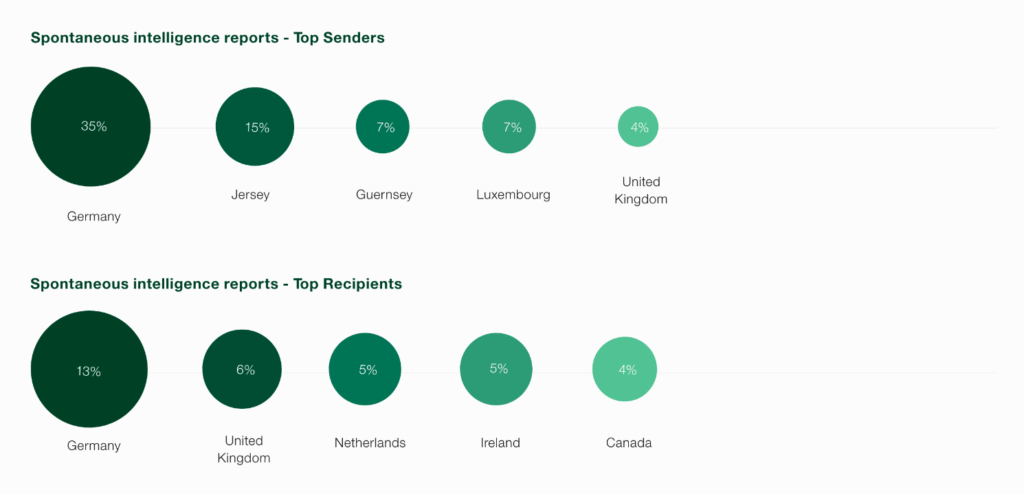
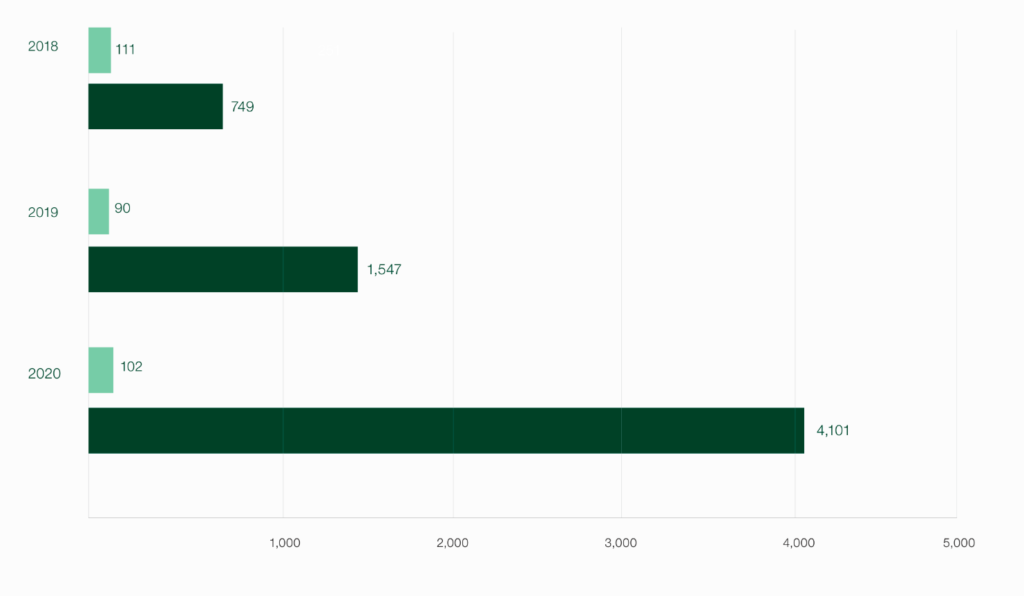
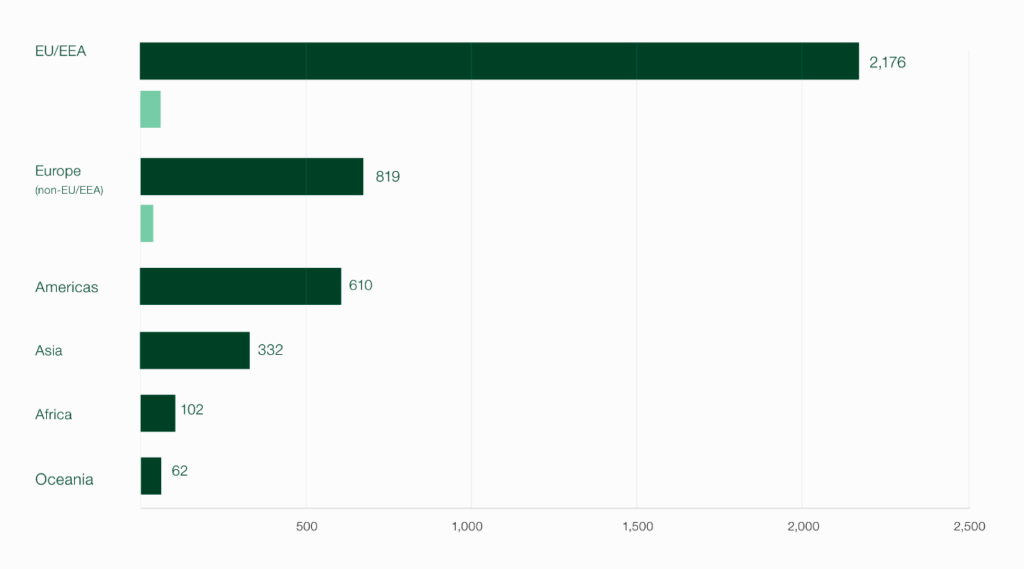
The FIAU has also increased the number of disseminations to the Malta Police Force. These disseminations can consist of analytical reports, additional intelligence reports and so-called spontaneous intelligence reports. The difference between spontaneous intelligence reports and analytical reports is that spontaneous intelligence reports are not as detailed as an analytical report. They usually relate to matters which are already known to the Police, where the information held by the FIAU is deemed to be of relevance to the MPF due to other independent ongoing investigations.
Observations on 2020 suspicious reports received
General statistical information
The figures on the next pages depict the top predicate offences that have been recorded, as well as the main reasons for suspicion.
As in past years, tax crimes and fraud have been the most reported alleged predicate offences, whilst discrepancies between transactional activity and the customer’s profile have been marked as the main reason for suspicion, identified in 33% of reports being submitted in 2020.
Main suspected predicate offences reported in 2020
31%
29%
19%
4%
4%
3%
Tax crimes
Fraud
Unknown Predicate offence could not be established
Others
Corruption & bribery
Forgery
2%
2%
2%
2%
2%
1%
Illegal gambling
Illicit trafficking in narcotic drugs and psychotropic substances
Robbery or theft
Trafficking of Human Beings
Terrorism, including terrorist financing
Participation in an organised criminal group and racketeering
33%
18%
14%
11%
10%
4%
Transaction activity which is unexplained or is inconsistent with known customer profile
Others
Customer became uncooperative
Unusual or suspicious identification documents or lack of documents
Adverse media Subjects, or persons linked to subjects of STR are adversely known on open sources
Transaction narrative is suspicious or does not make any commercial sense within the context of the transaction itself
4%
3%
3%
Transfers to, or from, high-risk jurisdictions, without apparent economic business reason/sense
Customer inexplicably stops contact
Unnecessarily complex structure - Ownership, control
Covid-specific case studies
As movement was restricted in 2020, many commodities became in high-demand, and individuals spent most of their time on the internet, trends were noticed all over the world in relation to changes in predicate offences and modi operandi used to launder the proceeds of crime.
Europol, the Egmont Group, the European Commission and other public and private institutions published materials on their websites to alert citizens and authorities alike of the specific trends and typologies that were being observed.
On 25 May 2020, the FIAU issued a Guidance Note, “Covid–19: Remaining Vigilant against a Changing Criminal Landscape”.
As of March 2020, the FIAU received a number of suspicious reports from the reporting entities that were specifically linked to the pandemic caused by Covid-19. Some case studies have been sanitised and are included in Annexes 4 and 5 at the end of the report.
Domestic and International Cooperation
In its activity, the Intelligence Analysis Section closely cooperates with both domestic competent authorities as well as its foreign counterparts.
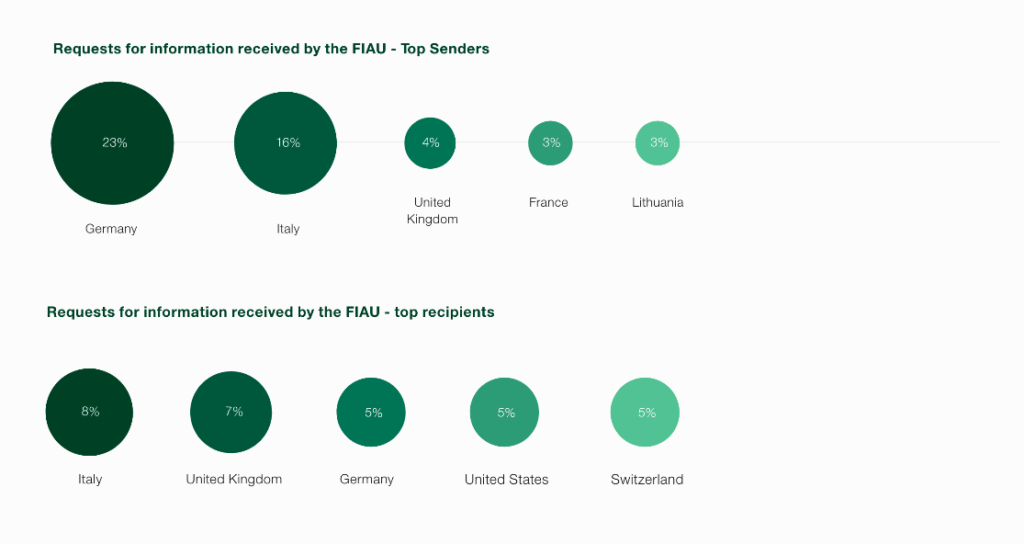
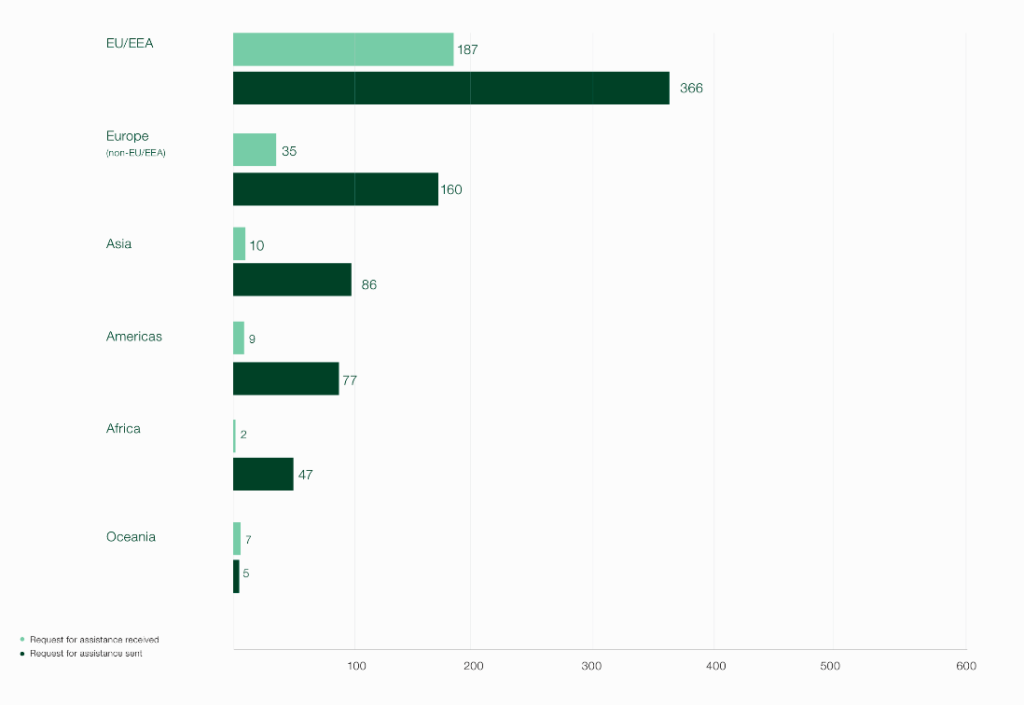
The FIAU cooperated and exchanged information daily with counterpart FIUs, both when pursuing its own analyses and when assisting other FIUs in their functions. Collaboration and exchange of information with other FIUs is an important element for the FIAU to be able to carry out its functions effectively and proactively. Information can be communicated with other FIUs either through requests for information, or spontaneously whenever the FIAU believes that the information in its possession can be of interest to one or more of its foreign counterparts. The conditions applicable to any such sharing of information and the extent of information that may be so exchanged is usually based on the FIUs’ domestic laws. Information is communicated through secure channels. The FIAU, being a member of the Egmont Group of FIUs, communicates with other Egmont Group members via the Egmont Secure Web. It also uses the FIU.NET system to exchange intelligence with FIUs from EU member states. Under Maltese law, the FIAU is authorised to exchange information with foreign counterparts without the necessity of having Memoranda of Understanding (MoUs) or formal agreements in place. However, it might be that the establishing of an MoU is a prerequisite for the exchange of information in other jurisdictions. Over the years the FIAU has signed 16 MoUs with foreign counterpart FIUs.
Countries with Memorandum of Understanding in place
Chart 13














Besides the numerous MoUs the FIAU has in place with its foreign counterparts, the FIAU has a number of MoUs in place with other national competent authorities, such as the Central Bank of Malta, the Malta Accountancy Board, the Commissioner for Revenue, the Sanctions Monitoring Board and the Commissioner for Voluntary Organisations.
The cooperation at national level focuses mainly on four points: assisting in active investigations, due diligence exercises, requesting information on cases the FIAU is pursuing, as well as sharing intelligence products that might be relevant to the specific authority.
Due to the FIAU’s role and functions, the main national authorities the FIAU cooperates with are the Police, the Malta Security Services (MSS), the Sanctions Monitoring Board (SMB), the Malta Financial Service Authority (MFSA) and the Malta Gaming Authority (MGA).
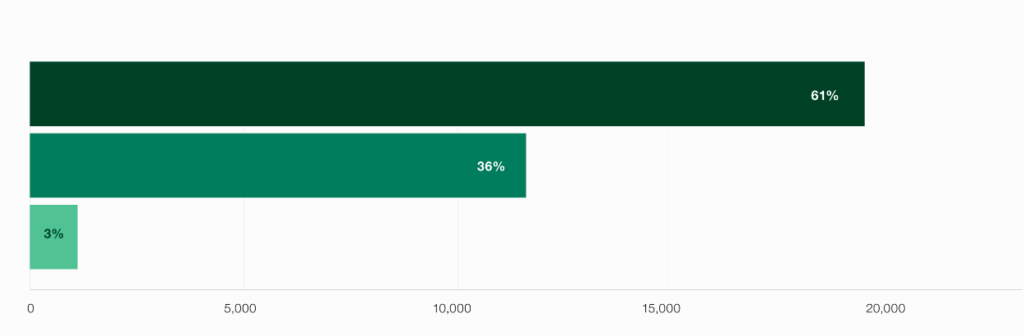
The FIAU handled over 2,100 requests for information by the national competent authorities in 2020. In 2020 the FIAU made over 31,000 requests for information to various entities. This figure marks a dramatic increase when compared to 2019 (13,696). This increase stems from the rise in suspicious reports received which required additional information to be analysed. In light of the introduction of the Centralised Bank Account Registry (further information is available in Chapter 3.4 of this report), it is predicted that this figure will decrease due to the FIAU’s direct access to this data system. The introduction of CBAR is in line with the requirements enshrined in the EU 5th AMLD and in line with one of the recommendations made by MONEYVAL.
The average time to respond to requests for information from foreign FIUs in 2020 was approximately 15 days.
Countries with Memorandum of Understanding in place
Chart 13
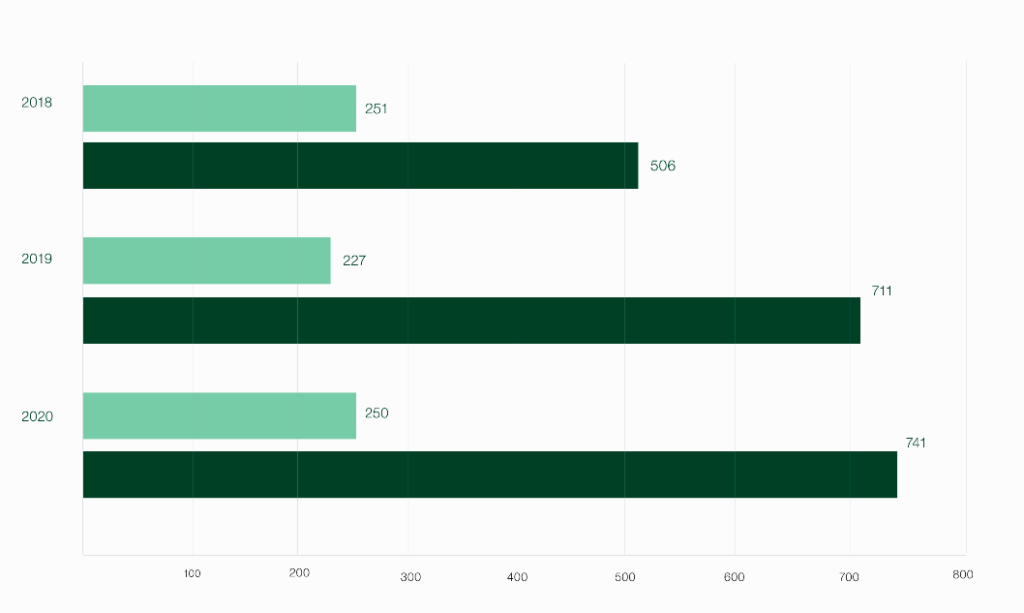
- Number of requests received by the FIAU
- Number of requests sent by the FIAU
Supervision
1. What is the role of the Supervision Section?
The function of the Supervision Section stems from Article 16(1)(c) of the Prevention of Money Laundering Act (PMLA) and revolves around monitoring compliance by subject persons with Anti-Money Laundering and Combating the Funding of Terrorism (AML/CFT) obligations set out in the PMLA, the Prevention of Money Laundering and Funding of Terrorism Regulations (PMLFTR) and the Implementing Procedures (IPs). In order to fulfil this function the Supervision Section is responsible for a number of roles.
Identify and monitor Money Laundering/Funding of Terrorism (ML/FT) risks within the sectors subject to supervision
The identification of ML/FT risks starts with the collection of data from various sources, including: information provided by subject persons themselves through the submission of the annual Risk Evaluation Questionnaire (REQ); information provided by prudential regulators; information provided by the intelligence function of the FIAU; any material adverse information obtained through open sources; results from compliance examinations carried out; and results of the National Risk Assessment (NRA) and Supra National Risk Assessment (SNRA). Once this risk data is collected, it is further analysed and assessed with the purpose of devising a risk-based supervisory strategy aimed at effectively monitoring and supervising the various sectors and subject persons operating within these sectors in accordance to the level of ML/FT risks which they pose. Whilst it is the objective of the Supervision Section to supervise all subject persons and sectors, the frequency and intensity of supervision is adjusted according to the results of the risk assessment. The collection and analysis of risk data is also used to identify and understand new emerging ML/FT risks, thereby ensuring that the latter are adequately addressed through supervision. The annual risk assessment is carried out by the Risk Team, a designated team within the Supervision Section which deals with data collection and analysis as well as the carrying out of risk assessments.
Carrying out AML/CFT compliance examinations
Compliance examinations are carried out by 3 distinct teams within the Supervision Section, each responsible for supervising different sectors in which subject persons operate. These teams include the Credit and Financial Institutions Supervision Team, the Investments, Virtual Financial Assets (VFAs) and Gaming Supervision Team and the Designated Non-Financial Businesses and Professions (DNFBPs) Supervision Team. Supervisory examinations are carried out because, as the AML/CFT regulator, the FIAU needs to ensure that subject persons operating in the different supervised sectors have sufficient and adequate control mechanisms in place to prevent them from being used as vehicles to facilitate money laundering. The carrying out of examinations and meetings with subject persons allow the Supervision Teams to assess whether they have adequate policies, procedures and controls in place to mitigate risks resulting from ML/FT.
2. The Risk Team Enchancements to the REQs
The risk assessment process is the backbone for effective AML/CFT supervision. A new assessment methodology, which also included the development and launching of the Compliance and Supervision Platform for Assessing Risk (CASPAR) system, was introduced in 2019. Apart from serving, first and foremost, as a central repository where information and risk data pertaining to the entire subject person population is stored, the CASPAR system is also a means of automating and facilitating the risk assessment process. The Risk Evaluation Questionnaire (REQ), which subject persons are required to submit on a yearly basis, is one of the main risk data blocks through which the risk assessment is carried out. The REQs contain information and data on the subject person’s business, activities, policies and procedures and are used by the FIAU to understand not only the ML/FT risks, but also the controls applied, across all relevant sectors and as prevailing within the respective subject persons. Although the FIAU launched the REQs in the first quarter of 2019, all the REQs used for the purpose of conducting the 2019 risk assessment were reviewed. Revised versions were issued during the first quarter of 2020 and immediately used for the 2020 risk assessment. The objectives behind the revision to the REQs were three-fold:
Provision of guidance to subject persons
Compliance with AML/CFT obligations is facilitated through the provision of guidance to subject persons. To this end, both the Risk Team and Supervision Teams engage regularly with subject persons to raise AML/CFT awareness and improve the knowledge base across the sectors through multiple channels. This includes participation in training sessions organised by the FIAU or as invited by external parties and by replying to queries received from subject persons throughout the year. The queries relate mainly to providing assistance on the interpretation in practice of AML/CFT obligations. In addition, the section issues guidance papers about particular AML/CFT topics, as well as providing guidance and feedback during the carrying out of supervisory examinations and meetings.
Carrying out AML/CFT compliance examinations
Compliance examinations are carried out by 3 distinct teams within the Supervision Section, each responsible for supervising different sectors in which subject persons operate. These teams include the Credit and Financial Institutions Supervision Team, the Investments, Virtual Financial Assets (VFAs) and Gaming Supervision Team and the Designated Non-Financial Businesses and Professions (DNFBPs) Supervision Team. Supervisory examinations are carried out because, as the AML/CFT regulator, the FIAU needs to ensure that subject persons operating in the different supervised sectors have sufficient and adequate control mechanisms in place to prevent them from being used as vehicles to facilitate money laundering. The carrying out of examinations and meetings with subject persons allow the Supervision Teams to assess whether they have adequate policies, procedures and controls in place to mitigate risks resulting from ML/FT.
Provision of guidance to subject persons
Compliance with AML/CFT obligations is facilitated through the provision of guidance to subject persons. To this end, both the Risk Team and Supervision Teams engage regularly with subject persons to raise AML/CFT awareness and improve the knowledge base across the sectors through multiple channels. This includes participation in training sessions organised by the FIAU or as invited by external parties and by replying to queries received from subject persons throughout the year. The queries relate mainly to providing assistance on the interpretation in practice of AML/CFT obligations. In addition, the section issues guidance papers about particular AML/CFT topics, as well as providing guidance and feedback during the carrying out of supervisory examinations and meetings.
2. The Risk Team Enchancements to the REQs
The risk assessment process is the backbone for effective AML/CFT supervision. A new assessment methodology, which also included the development and launching of the Compliance and Supervision Platform for Assessing Risk (CASPAR) system, was introduced in 2019. Apart from serving, first and foremost, as a central repository where information and risk data pertaining to the entire subject person population is stored, the CASPAR system is also a means of automating and facilitating the risk assessment process. The Risk Evaluation Questionnaire (REQ), which subject persons are required to submit on a yearly basis, is one of the main risk data blocks through which the risk assessment is carried out. The REQs contain information and data on the subject person’s business, activities, policies and procedures and are used by the FIAU to understand not only the ML/FT risks, but also the controls applied, across all relevant sectors and as prevailing within the respective subject persons.
Although the FIAU launched the REQs in the first quarter of 2019, all the REQs used for the purpose of conducting the 2019 risk assessment were reviewed. Revised versions were issued during the first quarter of 2020 and immediately used for the 2020 risk assessment. The objectives behind the revision to the REQs were three-fold:
- to address the feedback received from subject persons during the submission period of the REQ in the first half of 2019
- to eliminate, as far as possible, difficulties experienced by subject persons in understanding and interpreting particular questions included in the previous REQ versions
- to include additional questions to improve the quality of the information received, in view of the requests for information and statistics the FIAU receives from both local and international competent authorities
Following the launch of a further 8 sector specific REQs in 2020, the FIAU currently has 22 different REQs targeting different sectors. This allows for more fine-tuned risk assessments, which is critical to the risk-based supervisory process. The Risk Team is currently devising an additional REQ to be used in the case of VFA service providers. This REQ will be launched in 2021.
Following the launch of the revised and new REQs in 2020, a number of training sessions were organised by the Risk Team. The purpose of the training sessions was to:
- provide a brief presentation of the CASPAR system and the FIAU’s risk assessment methodology
- explain the 2020 REQ process
- present highlights of the statistics gathered though the 2019 REQ submission process
- address feedback and queries received from subject persons following the issuance of the new and revised REQs
The table below highlights details of the training sessions organised.
Read more
Submissions of Risk Evaluation Questionnaires
The FIAU has noted a positive increase in the REQ submission rate when compared to the previous year, across most sectors. The table below provides further details on the submission rate.
1 VFA agents were not yet subject persons during the REQ 2019 reporting period
Updates to the CASPAR system
During 2020, the Risk Team actively engaged in upgrading the CASPAR system with new functionalities which assist the Supervision Section in the carrying out of the risk assessment and supervisory functions. In addition to this, further updates to the CASPAR system were implemented for the purpose of enhancing subject persons’ user experience. Such updates include:
Subject persons not carrying out relevant activity
The FIAU acknowledges that there are a number of subject persons, such as accountants, auditors and advocates in Malta who in the past were actively involved in the provision of relevant activity in terms of Regulation 2 of the PMLFTR for a number of years, and currently are not conducting relevant activity. In such scenarios, instead of compiling the REQ on an annual basis and answering all the questions as ‘not applicable’ or ‘nil’, such subject persons are now able to simply tick the ‘Not Carrying out Relevant Activity’ box on the CASPAR system. Through this method, they are exempt from compiling and submitting the REQ. In the event that a subject person operates in more than one sub-sector and is not conducting relevant activity for just one of the sub-sectors, questions relating to the sub-sector where no relevant activity was performed will not show on the REQ that the subject person is required to submit.
Checkbox answers
In the 2020 REQ, the FIAU introduced questions which allowed subject persons to select multiple answers. This facilitated the completion of the REQ when, for example a subject person needed to reply that they had different controls in place and closed single answer questions limited their ability to respond fully.
Additional guidance
The 2020 REQ provided subject persons with additional information and guidance on particular questions included in the REQ in order to help them better understand the question and how to answer it. This was shown as an I button next to the question, which provided additional information and guidance on how to address the respective question.
Information on group of companies
CASPAR also allows the user to add information on any other subject persons that form part of the same group of companies, both local and foreign.
Subject person profile
Money Laundering Reporting Officers (MLROs) are now also able to input contact details of compliance officers who assist in the function of monitoring compliance with AML/CFT obligations.
The FIAU is committed to continuously investing in the CASPAR functionality to facilitate and enhance subject persons’ experience when using CASPAR. To this end, the Risk Team worked on a number of developments which will be launched during 2021, as further described in the following sections.
Additional contact details
As part of the 2021 REQ submission, subject persons will be asked to provide and input additional information regarding their operations on the CASPAR system. Such information, which depends on the sector or sub-sector in which the subject person operates, will include:
• information on the subject person’s ownership and its structure
• information on the group that the subject person forms part of (if applicable)
• details of shareholders, beneficial owners and directors
• information on the turnover and net asset values
• information on the target markets
• details of the subject person’s external auditor (if applicable)
• a copy of the subject person’s business risk assessment
Auto populating answers in the REQ
In order to make the completion of the REQ easier and more efficient, some of the questions will be auto populated with the previous year’s answers. This will enable subject persons to reduce the time taken to reply to questions included in the REQ, since subject persons are now only required to amend the answers to questions which were subject to a change.
Increasing the processing capacity of CASPAR
An upgrade to be carried out on the CASPAR system will also be focused on enhancing its operational speed. Towards the 2020 REQ submission deadline week, the FIAU noted that CASPAR experienced a decrease in performance due to the surge in accessing traffic. Therefore, developments are in progress to improve the speed and efficiency of the system and to reduce any timeout errors that subject persons experience when submitting the REQs.
3. Supervision carried out in 2020
One method through which the Supervision Section monitors compliance by subject persons with AML/CFT obligations is by carrying out on-site and off-site examinations. Whereas off-site examinations entail the process of reviewing information and documents that are provided by the subject persons remotely, on-site examinations are based on inspections carried out at the subject persons’ premises.
While on-site and off-site examinations are different in terms of intrusiveness and practicalities, both follow approximately the same FIAU supervisory practices. They involve formal prior notice to the subject person, formal requests for documentation, and reviews of the subject person’s policies, procedures, systems and adherence to AML/CFT obligations. Furthermore, examinations can be of different types:
Full-scope Examination
Covers the entire spectrum of risks and activities of the subject person from an AML/CFT perspective, producing a holistic view of its AML framework at a point in time.
Type of Examination
Full-scope Examination
Such examinations are carried out with the aim of reviewing one or more specific aspects of the AML/CFT framework of a subject person, thereby gaining a better understanding of the aspects under review.
Thematic Examination
A particular type of targeted examination, which focuses on a particular theme (e.g. types of transactions) in a group of peer institutions, which allows for better understanding of particular typologies.
Follow-up Examination
This is aimed at assessing the progress in implementing remedial actions or corrective measures prescribed by the FIAU further to a previous examination.
4. Adapting supervision during the Covid-19 Pandemic
Combating financial crime remains a priority, even in times of crisis such as the Covid-19 outbreak. Therefore, as the AML/CFT regulator, the FIAU remained committed towards ensuring that sufficient and adequate monitoring of ML/FT risks remained a priority and effective. To this end, and in order to mitigate the adverse effect of the pandemic, the Supervision Section adapted and adjusted the use of its supervisory tools to ensure ongoing compliance by subject persons with their AML/CFT obligations. Such measures included:
Extended deadline to submit REQ
On 16 March 2020, subject persons were notified that the deadline for submission was extended by 6 and a half weeks, from 1 April to 4 May, 2020. A further extension was issued on 4 May extending the deadline to 18 May.
Postponement of on-site inspections
Due to the restrictions in place to control the spread, most of the on-site inspections were suspended. Many subject persons resorted to remote working and the supervisory plan therefore moved to off-site examinations. Subject persons were notified by mail about the examination and later about the off-site nature of the examination and how the communication was to take place throughout.
Launch of secure file-sharing platform
Due to the off-site nature of the examinations, a safe location to upload the documents requested by the FIAU from subject persons was created. The files would include the business risk assessment and the AML/CFT policies and any further documentation requested to complete the examination. All meetings required were held remotely.
Extended deadline for representations
Due to the Government-imposed restrictions in place, the FIAU temporarily extended the deadline for the submission of written representations in relation to potential breaches of AML/CFT obligations noted during examinations. The standard timeframe would normally be one month, but during the peak of the measures this was extended to two months.
5. Collaboration with other supervisory authorities
During 2020, the FIAU continued to strengthen the collaboration with other supervisory authorities or bodies in relation to the monitoring of AML/CFT compliance by subject persons. Details of such collaboration are explained in more detail hereunder.
Collaboration with the MFSA and MGA
Article 16(1)(k) of the PMLA provides for the cooperation and exchange of information between the FIAU and other supervisory authorities in the supervision of subject persons. To this end, the FIAU signed a Memorandum of Understanding (MoU) with both the Malta Financial Services (MFSA) and the Malta Gaming Authority (MGA) with the objective of further enhancing cooperation between the parties. In this respect, the following cooperation took place during 2020:
The MFSA and MGA, through dedicated AML/CFT supervisory teams, carried out a total of 102 examinations on behalf of the FIAU. This stems from Article 27(3)(b) of the PMLA which permits the FIAU to request other supervisory authorities to carry out, on behalf or jointly with the FIAU, supervisory examinations on subject persons falling under the competence of the supervisory authority. The process used, which is shown in the following flowchart, follows the same procedure used by the FIAU when conducting compliance examinations.
The FIAU provided feedback to the MFSA on a number of applications for new licences. In this regard, the MFSA engages with the FIAU at an early stage during the authorisation process and consultations with the FIAU on AML/CFT aspects take place as necessary throughout the authorisation process. For this purpose, the MFSA shares information regarding the business model, the governance structure, and the AML/CFT policies and procedures. Discussions between the two authorities are held from an AML/CFT compliance and risk perspective, with a view to flag any arising concerns which may be present within the proposed business model from an AML/CFT perspective. Tripartite meetings involving the MFSA, the applicant and the FIAU are dedicated to discussing AML/CFT-related issues during the application process of institutions. Any deficiencies and concerns identified by the FIAU from an AML/CFT perspective have to be satisfactorily addressed by the applicant prior to granting of authorisation. Through this interaction with the prudential regulator, it is ensured that a holistic approach to address ML/FT risks is applied during the licensing stage.
Collaboration with the MFSA and MGA also takes place during the approval process of prospective MLROs. Although the ultimate approval falls within the responsibility of the MFSA and MGA, the latter regulators invite the FIAU, on a risk-based approach, to attend a number of interviews with prospective MLROs. The objective of these tripartite meetings is to provide feedback to the MFSA and MGA on the MLROs’ AML/CFT knowledge and preparedness. The FIAU attended a total of 75 interviews during 2020.
With effect from 2019, the MFSA and MGA started to provide the FIAU with risk-driven information on an annual basis about each licensed person/entity under their supervision. The prudential information, which is relevant for the AML/CFT risk assessment and supervision purposes, is entered in the CASPAR system and helps compile the subject person’s risk profile. During 2020, the MFSA and MGA provided information on a total 622 and 221 subject persons respectively, which information was analysed and included in the CASPAR system by the FIAU.
The International Monetary Fund (IMF) set a conservative estimate that as at 2018 around 5% of the Global Gross Domestic Product was laundered money”
David Lewis
FATF Executive Secretary
Cooperation agreement with the Sanctions Monitoring Board
In 2018, the FIAU, the MGA, the MFSA and the Sanctions Monitoring Board (SMB) entered into an agreement to cooperate with respect to the safeguarding of the Maltese financial, gaming and DNFBPs sectors from being misused for criminal purposes, including terrorism, funding of terrorism and the financing of proliferation of weapons of mass destruction. Through this cooperation, the FIAU, MFSA and MGA assist the SMB with monitoring subject persons’ compliance with their obligations as stipulated in the National Interest (Enabling Powers) Act (NIA) (Cap. 365 of the Laws of Malta) by conducting sanctions screening checks during AML/CFT compliance reviews. Such checks include in particular an assessment on the sanctions screening policies and procedures applied by subject persons in terms of Article 17(6) of the NIA.
In the event that potential breaches are identified during the execution of the aforementioned compliance reviews, the FIAU, MFSA and MGA report such findings directly to the SMB for further action. The flowchart below outlines the process used by the FIAU, MFSA and MGA when it comes to carrying out sanctions screening checks.
Cooperation with the Central Bank of Malta
In virtue of Articles 16(1)(k) and 27 of the PMLA, the FIAU is required and empowered to cooperate and exchange information with any local and foreign supervisory authority. This takes place when such cooperation and exchange of information would assist in ensuring that the financial sector and other relevant sectors are not used for criminal purposes or to safeguard their integrity. To this end, during 2020, an MoU was signed between the FIAU and the Central Bank of Malta (CBM), for the purpose of establishing cooperation between the two authorities. Following the setting up of the MoU, the FIAU has exchanged information on 7 financial institutions. Such information included information on:
• ML/FT risks posed by the financial institutions as concluded from the risk assessment carried out by the Risk Team.
• The financial institutions’ compliance with AML/CFT obligations following supervisory work carried out by the Supervision Teams.
• Any enforcement action taken by the FIAU with respect to breaches of AML/CFT obligations by the financial institutions.
Cooperation with foreign authorities
In line with EU legislation, European Supervisory Authorities’ (ESA) expectations and the FATF International Standards on Combating Money Laundering and the Financing of Terrorism and Proliferation, the FIAU also cooperates and exchanges information with other competent authorities in the EU. In fact, during 2020, the Supervision Section actively cooperated and exchanged information with foreign supervisory authorities in relation to subject persons established in Malta who operate on a cross-border basis, with the objective of supporting effective AML/CFT supervision. In this regard, the Supervision Section provided written feedback or held meetings with other foreign supervisors on a total of 13 institutions operating on a cross-border basis.
Participation in the Standing Committee on Anti-Money Laundering and Countering Terrorist Financing (AMLSC)
In line with Article 9 of Regulation (EU) No 1093/2010, the EBA established a permanent internal committee on AML/CFT that brings together senior representatives of national AML/CFT competent authorities. The main objective of this committee (referred to as the AMLSC) is to coordinate measures to prevent and counter the use of the financial system for the purpose of ML/FT and to prepare all draft decisions to be taken by the EBA in the context of Directive (EU) 2015/849 (AMLD) and Regulation (EU) 2015/847 (Wire Transfer Regulation).
In this regard, during 2020, the Supervision Section attended 8 meetings organised by the AMLSC. The meetings included updates by the EBA and European Commission as well as discussions amongst Member States on a variety of AML/CFT matters including ML/FT risks, risk-based AML/CFT supervision, incorporation of AML/CFT in the Supervisory Review and Evaluation Process (SREP) guidelines, deposit guarantee schemes, crypto assets, AML/CFT breaches database and definitions, and supervision of group entities operating in more than one country.
Enforcement
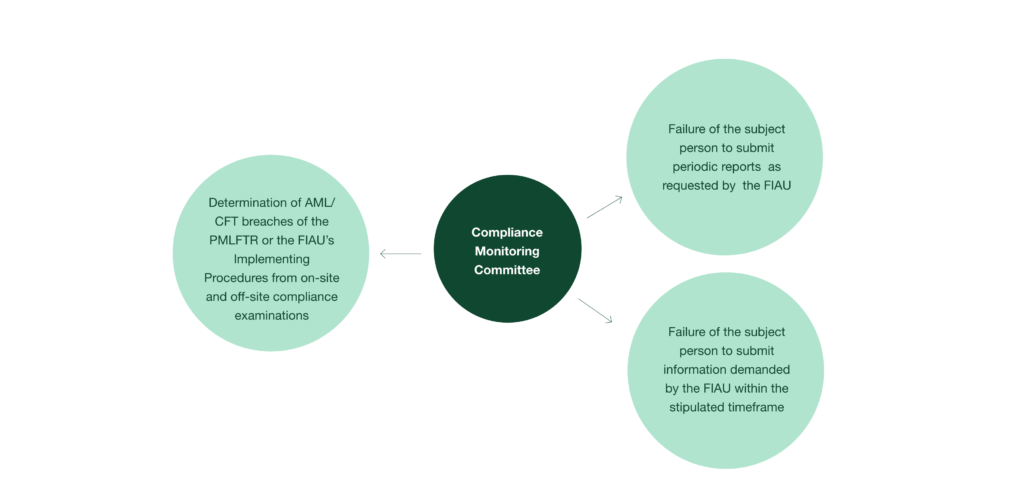
The Enforcement Section is responsible for the implementation of administrative measures as decided by the Compliance Monitoring Committee (CMC) for breaches of the Anti-Money Laundering and Funding of Terrorism (AML/CFT) obligations which subject persons are required to adhere to. Following the carrying out of the supervisory review process, the issuance of a Findings Report and the receipt of the representations from a subject person, an analysis of the same is performed and the case is subsequently brought before the CMC for its consideration.
The Enforcement Section monitors and performs exercises to check for failure to submit the REQ or the late submission of such. The Enforcement Section also carries out periodic exercises together with the FIAU Intelligence Analysis Section to check for failure to reply to FIAU requests for information or for relying late to the same. Failure to adhere to such requirements is also brought to the attention of the CMC.
What we do
The role of the Enforcement Section is to ensure that following the identification of potential breaches of the subject person’s obligations in terms of local AML/CFT legislation, Implementing Procedures (IPs) and other guidance notes issued by the FIAU, the case is brought forward before the CMC for its consideration and determination. Furthermore, this Section ensures that any decisions taken by the Committee with regards to penalties, measures or directives are adhered to by subject persons.
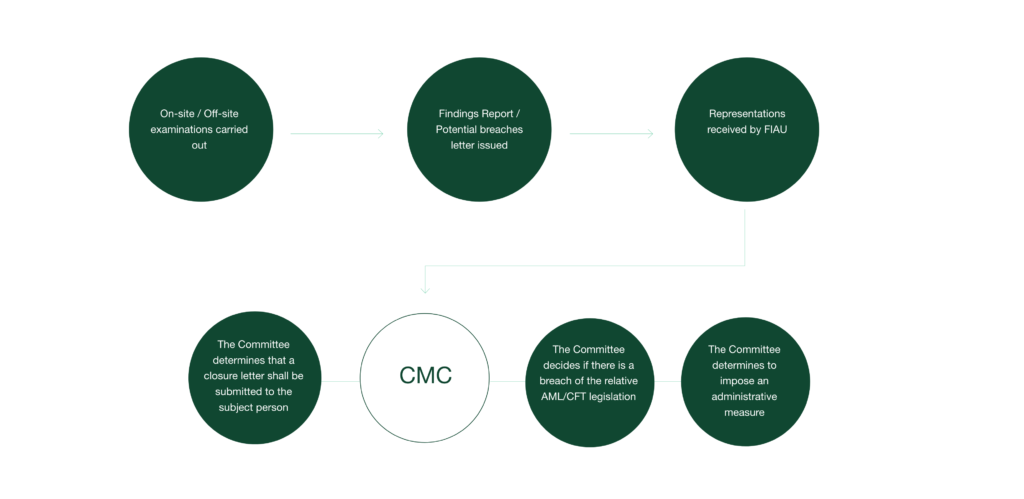
Where the Committee determines that an administrative measure shall be applied, the Enforcement Section issues the appropriate administrative measures letter (applying either a sanction or a directive or a combination of both) and the enforcement action is published on the FIAU website. The publication only provides a summary of the facts leading to the application of the administrative penalty1 and is not a replication of the administrative measures letter issued to the subject person. The publication provides the details necessary to cultivate a culture of compliance between entities and individuals subject to the provisions of the Prevention of Money Laundering Act (PMLA), Prevention of Money Laundering and Funding of Terrorism Regulations (PMLFTR) and Implementing Procedures (IPs) issued.
What are our aims?
The Enforcement Section aims to ensure that each case is presented in a comprehensive and fair manner to the CMC, that the decision delivered by the CMC is reflected in the letter submitted to the subject person, and that the breaches as determined by the CMC are effectively remediated by the subject person. The ultimate aim, in line with the FIAU’s vision, is to encourage, educate and support subject persons into full compliance with their AML/CFT obligations.
Compliance Monitoring Committee
The CMC set up internally by the FIAU assists the Director in carrying out the FIAU’s enforcement powers and ensuring that the FIAU’s powers are exercised in accordance with the policies established by the FIAU’s Board of Governors.
The CMC is entrusted with the responsibility to confirm or otherwise dismiss the potential breaches of AML/CFT legislation and IPs as outlined in the Findings Report as well as decide on the most appropriate administrative measure to impose depending on the type of breach determined. The CMC entrusts the Enforcement Section to act on the decision it takes for each case brought before it, both in communicating its decision to the subject person and also to follow up any directives served.
The CMC is composed of the following members:
• Committee Secretary
• Director (the Chairman)
• Deputy Director (who shall act as Chairman in the absence of the Director)
• Representative from the Legal Section not below the rank or grade of Senior Officer
• Representative from the Enforcement Section not below the rank or grade of a Senior Officer
During 2020, the CMC met 32 times and discussed on various cases. To arrive at their conclusions in the cases under review, Committee members review the analysis carried out by the Enforcement Section to determine breaches of the AML/CFT legal obligations by the subject person. When taking a decision on the actions necessary, the CMC assesses the materiality, seriousness and systemic concerns of the failures identified. A review of any repetitive failures is also carried out. On the basis of such considerations, the Committee decides on the most appropriate administrative measures to impose, ensuring that the measures imposed are proportionate, effective and dissuasive.
To ensure that the measures to be applied adhere to the abovementioned principles, the CMC observes a strict procedure as per the CMC Governing Principles and Framework, and is guided by the Sanctions Policy to reach a decision that is justified for the circumstances of the case.
In the case that an administrative penalty is applied, the Committee may determine that a directive to remedy the failures identified will also be served on the subject person. The Committee may also determine that a written reprimand is warranted for minor breaches of the law. The Committee needs to evaluate the case while bearing in mind the three principles explained below. The Committee will then decide which enforcement measure/s need/s to be imposed.
Seriousness of the breach
The CMC considers whether the breach is serious by taking into consideration the nature of the obligation breached and its importance, as well as the type of subject person who performed the breach and the period within which the breach subsisted.
Systemic nature of the breach
The CMC considers whether the breach is systemic, and if so, whether it is a qualitative systemic breach or a quantitative systemic breach.
Repetitive nature of the breach
The CMC considers whether this is the first time that the subject person has been found in breach of this particular obligation or whether there is an element of repetition.
Enforcement Measures
The Committee may impose several different administrative measures, and in some cases may even decide to impose two or more measures simultaneously. The measures which may be imposed are:
Administrative penalty
A pecuniary fine may be imposed because of a breach of an AML/CFT obligation. The fine may range from €250 to €1,000 for minor breaches, and up to €1,000,000 or €5,000,000 (or 10% of the turnover) for subject persons carrying out relevant activity or relevant financial business, respectively. Where the fine exceeds €5,000, the subject person has the right to file an appeal before the Court of Appeal (Inferior Jurisdiction).
Directive to take remedial action
The purpose of a directive is to require a subject person to remediate the shortcomings noted during a supervisory examination.
• The directive issued by the FIAU may require a subject person to update policies and procedures and/or to review customer files within specific timeframes.
• The directive may also require the subject person to draw up an action plan, with specific action points and target dates for the completion of each point. Meetings are held with the subject person on a periodic basis, depending on the extent of the directive and the seriousness of the failures determined.
• The follow up action may also require the implementation or the enhancement of systems and measures used to mitigate ML/FT risks and to provide system walk-throughs as necessary. The follow up action may also require the provision of customer files for review and also the interviewing of officials.
For further statistical details on the directives to take remedial actions served on subject persons, refer to Annexes 10 and 11.
Written reprimand
The Committee may decide to issue a written warning on the subject person for minor breaches of AML/CFT obligations that apply to its operations.
Publication of Administrative Measures
In accordance with Article 13C of the PMLA, the FIAU publishes all administrative measures imposed by the Committee on its website. Where an administrative penalty is applied and is not more than €50,000, the publication is published anonymously. The purpose behind publication is two-fold:
• Dissuasive mechanism where the publication is not published anonymously.
• As a means to inform and educate subject persons about their AML/CFT obligations.
Termination of particular business relationships
The Committee has the power to request a subject person to terminate a business relationship where, based on the findings identified, it determines that the relationship exposes the subject person to extreme ML/FT risks.
Notification or recommendation to other supervisory authorities
The Committee may decide that the findings noted require the attention and potential action of other supervisory authorities.
Enhancing the value of enforcement measures
As can be seen from Table 1 and in Annex 6, during the past year, the FIAU performed supervisory and enforcement actions to better ensure subject persons’ compliance with the PMLFTR and the FIAU’s Implementing Procedures. These actions are necessary to combat money laundering and the funding of terrorism. In fact, throughout 2020, the Enforcement Section issued a total of 34 administrative measures (including administrative penalties and/or directives to take remedial actions) relating to AML/CFT visits that were carried out on subject persons2. Out of these 34 administrative measures, 22 were published on an anonymous basis, meaning that the visit had either resulted in a directive to take remedial action, or in an administrative penalty which did not exceed €50,000.
To add value to the use of enforcement measures and in line with the FIAU’s aim to assist subject persons in complying fully with their AML/CFT obligations by supporting improved understanding, the Enforcement Section carried out a review of all these actions and collated the most common failures identified across sectors. These will be made available to subject persons in the near future through a factsheet, entitled “Enforcement Factsheet: Common failures across sectors subject to AML/CFT Supervision”. The paper included a summary of the common pitfalls and major shortcomings that were observed during supervisory examinations, and the issues led to the subject persons being found in breach of the relevant regulatory obligations enshrined under the PMLFTR and their relevant sections in the FIAU’s Implementing Procedures. Furthermore, a number of case studies will be included, with the aim of assisting readers with understanding particular shortcomings. Although the main aim of the paper is to assist subject persons operating in various sectors by providing insight into these common failures, it is also intended to assist subject persons with reviewing their own internal AML/CFT measures and controls. While understanding risks is essential, the transfer of this knowledge into effective methods to determine the level of risk exposure, both at the business and customer level, is crucial. Effective measures to monitor customer relationships and transactions that take place through the established relationships are indispensable.
The paper also intends to ensure that subject persons’ operations are aligned with the FIAU’s expectations and the legal obligations set out under the PMLFTR and, more importantly, that the measures and controls in place are adequately robust to protect both the subject persons themselves and the local economy, including the Maltese financial system, from being abused to facilitate ML/FT.
The most common failures noted across all sectors were those related to:
• Inadequacies in the customer risk assessment measures implemented
• Not obtaining all the information necessary in relation to the purposes and intended nature of the business relationship
• Not carrying out the necessary enhanced due diligence measures for high risk customers
• Non comprehensive policies and procedures
• Non comprehensive customer verification measures
• Failure to carry out effective scrutiny of transactions
• Inadequacies in the business risk assessment measures implemented including the effective assessment of risks posed by jurisdictions
Statistical analysis
Administrative penalties per sector imposed in 2020
Table 1
Total amount of administrative penalties
imposed during 2020: €4,651,311
Remedial actions served in 2020
Chart 1
27%
17%
13%
10%
7%
7%
CSPs - Firms/Companies
Notaries
Credit Institutions
Investment Services
Financial Institutions
Accountancy/Audit - Individuals
7%
3%
3%
3%
3%
CSP - Individual
Advocates - Individuals
Trustees & Fiduciaries
Remote Gaming Operators
Real Estate Agents
CBAR
The amendments carried out by the EU Fifth Anti-Money Laundering Directive (5th AMLD) oblige EU Member States to establish centralised automated mechanisms for the collection and retrieval of data on bank and payment accounts identifiable by IBAN, safe custody services (SCS) and safe deposit boxes (SDB) provided by credit and financial Institutions within their territory. The purpose of this mechanism, which was extended in EU Directive 2019/1153 on the use of financial and other information, is for Financial Intelligence Units (FIUs) and other competent authorities to get timely access to financial information.
As part of the local transposition, the FIAU has been vested with the power to establish and administer the Centralised Bank Account Registry (CBAR) for Malta.
The FIAU spearheaded a one-year project which took CBAR from the drawing board to the desks of authorised users. The journey involved engagement with subject persons and competent authorities, procurement of a customised system, drafting and publishing of the CBAR regulations. Moreover, an FIAU delegation met with a Spanish one responsible for administering a similar system fo r a number of years to understand system design and reportable data requirements. As a result, the FIAU established a new section within its organisational structure dedicated to the administration of CBAR.
The CBAR system officially went live on 26 October 2020 for data collection purposes and is gradually being launched amongst competent authorities for data retrieval.
NOV 2019
MAY 2020
OCT 2020
Procurement of a customised system
JAN 2020
Plot Testing Environment
AUG 2020
GO-Live Date
NOV 2019
Outreach
The FIAU engaged with subject persons through a series of targeted workshops and webinars, as well as via a consultation process, to outline the requirements, gather feedback and eventually to provide more insight into the registration process, data schema, validation rules and file transfer. In parallel, the FIAU also held meetings with the competent authorities to introduce CBAR and outline its main purpose.
Technology
The FIAU procured the development of a customised system for data collection and retrieval. Working closely with contractors on system design and requirements, the FIAU ensured the system observes the highest industry standards in data protection, cyber security and information security, including compliance with ISO 27001.
Regulations
The Centralised Bank Account Registry Regulations (CBAR Regulations) were published on 20 October 2020 and brought into the force provisions of the 5th AMLD and of EU Directive 2019/1153.
The following diagram and accompanying text illustrates at a high-level the process involved in the data collection, validation and retrieval.
01
Data Collection
Subject persons which provide CBAR-covered products and services (Reporting Entities) are required to submit their entire reportable data in line with the technical specifications once every 7 calendar days at a minimum.
Reportable data consists of the following elements and attributes:
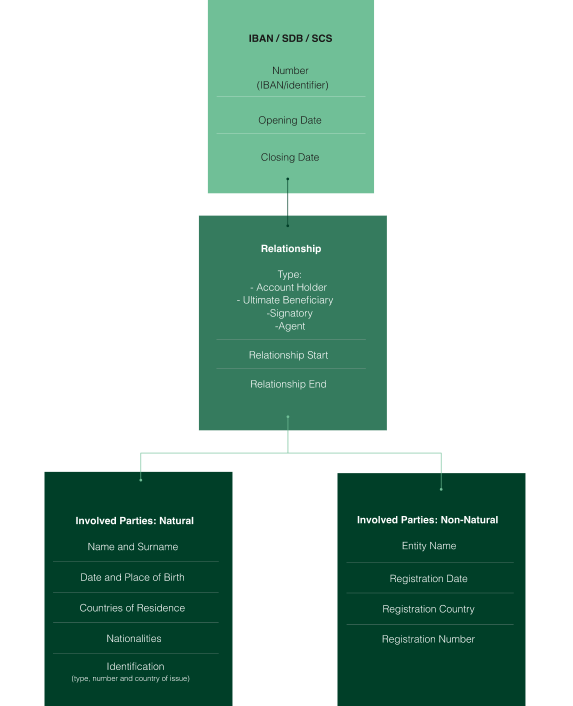
02
Data Validation
While the responsibility for data completeness and accuracy rests with the Reporting Entity, CBAR incorporates an automated three-tier validation process consisting of over 50 rules to ensure that the data submitted meets the required standard.
When a submission fails, a detailed validation report is made available to the Reporting Entity. The Report pin points any issues in the data at account or involved party level to assist the entity in remediating any issues and resubmitting as necessary.
03
Data Retrieval
In accordance with the CBAR regulations, the following authorities will be granted access to the CBAR Portal:
• Intelligence Analysis within FIAU
• Malta Police Force
• Asset Recovery Bureau
• Commissioner for Revenue
• Sanctions Monitoring Board
• Malta Security Service
Validated data submitted by Reporting Entities is available in its entirety to authorised users. Data is searchable strictly on a case-by-case basis and for the following purposes:
• Preventing, detecting, investigating or prosecuting money laundering, associated predicate offences, funding of terrorism or any other serious criminal offence.
• Replying to justified requests for information received from foreign or supranational bodies having similar functions.
The introduction of CBAR has improved the efficiency with which competent authorities discharge their functions and resulted in a reduction in blanket requests for information submitted to subject persons. The introduction of this data registry has allowed for a dramatic reduction in time frames when responding to requests fro information. Manual requests to credit and financial institutions which in the past could take over a week and required multiple exchanges, are now resolved in seconds.
This milestone addresses one of the recommended actions posed by MONEYVAL in its Fifth Round Mutual Evaluation Report of Malta. The recommended action saw the introduction of a centralised register as a means for competent authorities to leverage financial intelligence for investigative purposes.
Policy, Strategy & Quality Assurance
During 2020 the FIAU set up a Policy, Strategy and Quality Assurance Section. The creation of this section was envisaged in the FIAU’s Restructuring Plan for 2018-2021. The aim is to have a dedicated Section that focuses on the formulation of strategic plans to keep improving the FIAU’s operations in sync with on going legislative and practical developments. The Section was also created to coordinate and oversee the operations of the FIAU to ensure alignment with internal strategies and policies and to maintain and improve the quality of the Unit’s work. The importance of this section in ensuring better internal synergies and a more proactive FIAU is ever more relevant in a Unit that has grown exponentially over the past few years.
This Section is currently composed of 2 officers, and will be further consolidated with the recruitment of further employees during 2021. Although this Section only became operational in late 2020, it has already embarked on a number of projects. These include the carrying out of an extensive exercise to identify areas of improvements within the core units of the FIAU, which culminated in formulation of a report which is currently being transformed into a work plan to improve on current operations. Concurrently, members of this section were liaising closely with the NCC which in 2020 embarked on a project to revise and formulate the National AML/CFT Strategy for the years 2021-2023, which is now embedded within the FIAU’s work plan.
The Quality Assurance Team within the Section is currently in the process of setting a methodology and plan for the carrying out of regular quality assurance assessments of the FIAU’s core units (i.e. the Intelligence Analysis, Supervision and Enforcement Sections) and the Legal Affairs Section, which plan will start being implemented in 2021.
Read more
Legal Affairs
The Legal Affairs Section within the FIAU is entrusted with a number of functions which are key in ensuring that the FIAU is able to carry out the roles assigned to it. Like most other in-house legal units, it provides legal assistance and advice to the organisation. However, the Legal Affairs Section also has a determining role when it comes to the FIAU’s institutional and international relations, coordinating meetings with counterparts and participation within international and regional fora. Another role of the Legal Affairs Section is the provision of guidance to subject persons on their obligations at law and how these can be met in an effective manner. This role became more prominent over the last year. All of the functions mentioned are carried out by two teams within the section, one being the Legal and International Relations Team and the other the Guidance and Outreach Team.
As the FIAU ramped up efforts to ensure it addressed all MONEYVAL recommendations and identified technical deficiencies touching upon its remit, 2020 proved to be an especially challenging year. With the Covid-19 pandemic causing havoc when it comes to human interaction, there was the need to rethink how work was to be carried out to ensure that any commitments were duly met. One can safely say that both teams managed to deliver. Changes to the legal framework were drafted and new laws introduced, a number of guidance documents were issued while existing ones were also revised. The FIAU’s outreach initiatives continued as the internet became the key means through which to ensure that subject persons received the necessary guidance on all things AML/CFT-related. In addition, the FIAU also assisted other authorities and bodies as they sought to implement the necessary changes to address MONEYVAL recommendations. All these activities contributed to meeting commitments both at a European level, especially with regards to the transposition of Directive (EU) 2018/843, or as it is more commonly referred to the Fifth Anti-Money Laundering Directive (5th AMLD), and to addressing a series of MONEYVAL recommendations. The legal amendments ensured that any technical deficiencies related to the laws falling within the FIAU’s remit were duly rectified. On the other hand, the FIAU’s guidance and outreach programme was focused on those sectors and areas identified in Malta’s Evaluation Report as requiring a more in-depth understanding not only of their obligations at law but especially of the Money Laundering and Funding of Terrorism (ML/FT) risks they face and how they can be abused for ML/FT.
The Legal and International Relations Team
In 2020, the Legal Team were involved in various projects to ensure that the FIAU fulfils its functions in an effective manner in line with international and European standards as well as local laws.
Drafting of legislation
One of the key legal responsibilities assigned to the FIAU and handled by the Legal Team was the drafting of amendments to the Prevention of Money Laundering and Funding of Terrorism Regulations (PMLFTR) which, together with amendments to the Prevention of Money Laundering Act (PMLA) that came into force in 2020, ensured the transposition of the greater part of Directive (EU) 2018/843, referred to as the Fifth Anti-Money Laundering Directive (5th AMLD).
Read more
List of prominent public functions
Establishing the possibility of creating a national list of prominent public functions to assist subject persons in determining who is to be considered as a Politically Exposed Person (PEP)
Key changes brought about by the 5th AMLD
Enhanced FIAU powers
Allowing for improved and strengthened cooperation and exchange of information between local and foreign competent authorities and the FIAU
Broadened definition of “Relevant Activity”
Now including new activities such as trading in works of art and explicitly including intermediation activity within the rental market
New Customer Due Diligence
Particularly in relation to eletronic money and Enhanced Due Diligence measures when dealing with non-reputable jurisdictions
Another important legal milestone in the fight against Money Laundering and Funding of Terrorism (ML/FT) was the drafting of the Centralised Bank Account Registry Regulations, which provide a legal basis for the introduction of the CBAR system. The legislation sets out what the obligations of reporting entities are. Furthermore, it sets out the specific grounds by which individual authorities responsible for the prevention, detection, investigation and prosecution of serious criminal offences can access the data contained in the system. This ensured that even this requirement arising from 5th AMLD was transposed into Maltese law.
Apart from the set of amendments to the PMLFTR mentioned earlier, additional ones were finalised and adopted in 2020 to address a series of technical deficiencies which had been identified during the 5th Mutual Evaluation of Malta’s Anti-Money Laundering and Combating the Funding of Terrorism (AML/CFT) framework. In this respect, the most salient changes resulting from these amendments are related to the reporting obligations of subject persons and to the enforcement process of the FIAU as set out hereunder:
• Revision was made to the timeframe within which a subject person is to submit a Suspicious Transaction Report, so that today reporting must take place promptly upon there being any suspicion, knowledge or reasonable grounds to suspect ML/FT. In addition, it was further clarified that the reporting obligation applied also with respect to attempted transactions and not just completed ones.
• The amendments carried out specifically state that any administrative penalties applied by the FIAU are to be effective, proportionate, and dissuasive. In addition, the FIAU is now able to apply administrative sanctions on individuals who have a senior managerial role within a subject person and who are found to be responsible, and therefore, have caused or contributed to the AML/CFT breaches committed by that subject person. As a result of this amendment, the FIAU can now impose administrative penalties of not less than€1,000 but not more than €250,000, not only on individuals holding directorship or similar positions/functions, but also on individuals holding senior executive management functions, the MLRO, and the officer responsible for AML/CFT compliance within a subject person. Furthermore, the FIAU also acquired the power to recommend to any relevant supervisory authority that the individual in question be suspended or precluded from exercising any of these functions within that or any other subject person.

In addition to the above, the Legal and International Affairs Section also provided input with respect to legislative proposals presented by other authorities, especially with respect to the regulation of real estate agents and dealers in precious metals and stones.
Conclusion of Memoranda of Understanding
The FIAU believes that establishing, maintaining, and strengthening strong cooperation and collaboration with national agencies is essential and vital for public authorities involved in the fight against ML/FT to be effective in their work, functions and responsibilities. Such a goal can only be achieved through effective cooperation mechanisms agreed by the parties, pledging strong communication, sharing of information, expertise and resources with a view to prevent, detect and effectively combat ML/FT.
In view of the ever-growing importance of strengthening cooperation between the FIAU and other national bodies, a number of Memoranda of Understanding (MoUs) were signed by the FIAU during 2020. The FIAU concluded MoUs to strengthen its cooperation and exchange of information and assistance with the Central Bank of Malta, the Malta Gaming Authority, and the Malta Accountancy Board. An exchange of information agreement was also entered into between the FIAU and the Malta Business Registry.
International relations – fora and meetings
In addition to a number of fora and meetings attended by other functions of the FIAU, the Legal and International Relations Team was quite active in ensuring that the FIAU was represented in discussions relevant from an AML/CFT perspective, both at international and EU level:
Officers from the Legal and International Relations Section attended meetings of the Expert Group on Money Laundering and the Funding of Terrorism (EGMLTF). Presided over by the European Commission, the EGMLTF is a coordinating body that brings together national AML/CFT experts from each EU Member State to advise and provide expertise to the Commission, while also serving as a forum for the exchange of opinions on various AML/CFT issues.
The topics predominantly discussed during these meetings revolved around the new AML Action Plan presented by the European Commission in May 2020, which encompassed the various future initiatives to be taken at EU-level. The harmonisation of the AML/CFT Rule Book, the set-up of an EU-level supervisory body and an EU coordination and support mechanism for Financial Intelligence Units (FIUs) are some of many initiatives discussed.
During 2020, in addition to participating in EGMLTF meetings this section also participated in a number of Working Groups organised by the European Banking Authority (EBA), which is entrusted with drafting new or revising existing Guidelines issued by the EBA. Unlike what their name may suggest, Guidelines issued by the EBA are binding in nature. Participation in these Working Groups ensures that the FIAU has an opportunity to share its experiences when it comes to the implementation of particular obligations. Also, and equally as important, the FIAU is placed in a position to influence what is to be required from both authorities and subject persons when it comes to specific obligations.
Furthermore, the Legal team was actively involved as a partner in the EU-funded project called PROTAX - New Methods to Prevent, Investigate and Mitigate Corruption and Tax Crimes in the EU. PROTAX brings together researchers, law enforcement agencies and national tax authorities from different Member States. The aim is to generate policy guidelines and toolkits to harmonise the treatment of tax and enhance information sharing across several European jurisdictions by analysing the similarities and differences of tax crime treatment in different jurisdictions.
As a partner in PROTAX, the FIAU assisted the project consortium with the drafting and review of a number of reports, replies to questionnaires and monthly consortium meetings. In November, the FIAU, together with the project coordinator, organised a workshop via video conference, to discuss the three tool kits and risk assessments developed by the project, which were designed to guide and support policymakers and Law Enforcement Authorities (LEAs) in combating tax crime.
The workshop was attended by various members of the project consortium and representatives of Maltese public authorities, agencies, and departments. They were invited to share their experiences and exchange information in relation to several dimensions of tax crime practises in Malta. These included the legal methods, prosecution techniques, convictions, and the roles of the involved actors. Officials from the FIAU, together with officials from the Office of the Commissioner for Revenue, Office of the Attorney General, the Economic Crimes Unit within the Malta Police Force, the Asset Recovery Bureau and the Ministry for Finance and Employment attended the workshop.
The Legal Team is always in search of opportunities to learn, and share its experiences and network in the world of AML/CFT. Therefore, officers from the Legal Affairs Section also attended the CETS198 Conference of the Parties hosted by the Council of Europe. This body is responsible with overseeing and monitoring how signatories to the Convention on Laundering, Search, Seizure and Confiscation of the Proceeds from Crime and on the Financing of Terrorism, adhere to this convention and it does so through the application of a horizontal review mechanism.
The Guidance and Outreach Team
Subject persons’ awareness of ML/FT
One of the issues flagged in the MONEYVAL report was that more needed to be done to ensure that subject persons are aware of the ML/FT risks they face during their activities, and how to address these through the application of AML/CFT requirements. The FIAU considered that this required not merely the sharing of information but a consistent and protracted educational effort and, to this end, it created a fully-fledged Guidance and Outreach team. The team has a critical role in educating and supporting subject persons to enable them to be compliant with the laws and processes of AML/CFT. Subject persons have a point of reference within the FIAU, where to ask for clarifications, information, and support. In 2020, eight guidance documents were published.
The pandemic did not put a stop to these efforts and the work continued tirelessly. The focus in 2020 was on sector-specific guidance. Whilst dissemination of general guidelines is critical to the fight against AML/CFT, breaking the larger picture into its smaller parts and clarifying them per sector is essential. Thus ensuring that the legal obligations, work practices and processes specific to each subject person from different sectors are better understood.
To further assist subject persons in their fight against ML/FT and to help them detect suspicious activities and understand when they should submit a STR, the guidance documents issued placed more emphasis on red flags, typologies, and case-studies. This way the theoretical framework was concretised and more easily understood. The reason was two-fold: to improve risk understanding and to improve the quantity and quality of STRs.
The guidance documents published can be split into three different categories, namely: Sector-Specific Guidance, Thematic Guidance and Interpretative Notes.
Guidance documents published
Table 1
t of reference within the FIAU, where to ask for clarifications, information, and support. In 2020, eight guidance documents were published.
1 https://fiaumalta.org/wp-content/uploads/2020/05/Guidance-18.02.2020-Guidance-Paper-Property-Sector.pdf
2 https://fiaumalta.org/wp-content/uploads/2020/11/20201127_FIAU-Guidance-Document-The-Funding-on-Terrorism.pdf
3 https://fiaumalta.org/wp-content/uploads/2020/08/Interpretative-Note-Relevant-Activity-Lawyers.pdf
4 https://fiaumalta.org/wp-content/uploads/2020/11/FIAU-Implementing-Procedures-Part-II_RemoteGaming.pdf
5 https://courses.fiaumalta.org/wp-content/uploads/2020/05/Guidance-FIAU-Guidance-Note-COVID-19.pdf
6 https://fiaumalta.org/wp-content/uploads/2020/07/Interpretative-Note-Relevant-Activity-for-Notaries-FINAL.pdf
7 https://fiaumalta.org/wp-content/uploads/2020/12/FIAU_IPs-Part2-CSPs-FINAL-Version.pdf
8 https://fiaumalta.org/wp-content/uploads/2020/09/20200918_IPsII_VFAs.pdf
• Sector Specific Guidance included a guidance paper for subject persons operating in the Property Sector, including notaries and real estate agents, which contained information on risk factors, mitigating measures, and red flags that are typically associated with the property sector in Malta as well as Maltese case studies involving money laundering through real estate.
• Three sector-specific Implementing Procedures (IPs) Part II applicable to Company Service Providers (CSPs), the Remote Gaming Sector and Virtual Financial Assets (VFAs) were issued. These provide binding guidance on the application of the Customer Due Diligence (CDD) obligations arising from the PMLFTR. Both the IPs Part II for VFAs and the IPs Part II for the Remote Gaming Sector addressed risk factors and red flags in addition to due diligence obligations. The IPs Part II for the Remote Gaming Sector, which is an update to the one originally issued in 2018, also dealt with issues encountered during supervision and enforcement processes, as well as local case studies analysed by the FIAU’s Intelligence Analysis Section. The IPs Part II for VFAs also tackled trends and case studies, whereas the one for CSPs tackled in detail CDD obligations to address common interpretational issues and provided explanatory scenarios.
• Two Thematic Guidance documents were issued, one on the funding of terrorism and the other on Covid-19. The funding of terrorism document is a landmark document that defines funding of terrorism and explains the various ways that financial and professional services can be misused, and sets out the risks, typologies and red flags on emerging trends identified in Malta. The Covid-19 Guidance Note provides information on the current and anticipated threats and criminal activities resulting directly from the global pandemic and the ensuing economic crisis whilst reminding subject persons that the Implementing Procedures Part I provide ample guidance on how to carry out remote verification, allowing subject persons to swiftly adapt to online due diligence. It also advised subject persons to remain vigilant.
• Two Interpretative Notes were issued to set out the definition of relevant activity for lawyers and for notaries. The aim is to clarify whether a given service constitutes relevant activity and, as a result, whether AML/CFT measures must be carried out. Through these interpretative notes it was ensured that AML/CFT laws are applied consistently among the respective sectors. When drafting these documents, the Guidance and Outreach team always worked closely with sector representatives to ensure practical guidance that considers the actual realities and challenges faced by the sector.
Training
The Guidance and Outreach Team goes beyond the publication of documents and has always actively sought to organise training opportunities for subject persons. Whilst the pandemic might have stripped the team from engaging through actual face-to-face events, the Team took advantage of the disruption caused by Covid-19 to provide more training opportunities via the delivery of webinars on various topics.
The FIAU sought to make training through webinars as accessible as possible by ensuring that most were free of charge. Furthermore, recordings of most of the webinars delivered were made publicly available on the website without the need for registration, and were publicised on social media.
In total, 14 webinars were organised by the FIAU in 2020; some were sector-specific and others were thematic, as highlighted below:
In 2020 the FIAU continued with its private-public partnership initiatives, which besides the Joint Committee for the prevention of ML/FT, include the AML/CFT consultants’ Forum. The forum brings together AML/CFT consultants and FIAU representatives in an informal meeting space to discuss and understand the issues faced by subject persons in the implementation of their AML/CFT obligations.
In addition, the Guidance and Outreach Team delivered presentations and participated in panel discussions during several events organised by third parties, including both the private sector as well as other authorities, to complement its educational and outreach initiatives.
Furthermore, the Guidance and Outreach Team started participating in FinanceMalta’s Banking Sub-committee and continues to do so. The Banking Sub-committee brings together representatives from the banking sector and other private sectors, and various public competent authorities that are involved in the financial services sector.
The FIAU’s role in this sub-committee is to further assist banks in implementing their AML/CFT obligations and managing risks when onboarding new clients. One outcome of the sub-committee will be the inclusion of case studies in the Implementing Procedures Part II for Credit and Financial Institutions.
Other initiatives
The FIAU believes that a culture of compliance requires that anyone involved in the relevant sectors be aware of why it is important from the very start. To this end, the FIAU has also been active within the University of Malta to provide dedicated sessions in key courses on AML/CFT aspects. A variety of courses have been targeted, including law, accountancy, and criminology.
Internal training
The effective supervision of subject persons requires FIAU officers to be aware of the latest requirements introduced and guidance provided by the FIAU. The Guidance and Outreach Team has also been an important asset in this respect, as it held training for both FIAU officers as well as officers from the MFSA and the MGA who act on the FIAU’s behalf.
Conclusion – future initiatives
2021 promises to be as demanding and exciting a year as 2020. While Covid-19 continues to limit face-to-face interaction, the Legal Affairs Section is set to further deliver on a number of existing and new projects. A number of guidance documents, including a series of sector-specific Implementing Procedures, are at an advanced stage of drafting, and will be finalised by the end of 2021. The team is committed to continue building on the momentum of its outreach efforts into 2021.
8
Guidance Documents published
14
Webinars organised by the Guidance and Outreach Team
17
Outreach Training Events participated in
2,100
Subject persons the FIAU delivered training to
1,500
Subject persons who attended Outreach Events the Guidance & Outreach Team participated in
In 2021, the Legal and International Team will continue to work on completing the transposition of Directive (EU) 2019/1153 into Maltese Law. Parts of the said directive have already been transposed through the Centralised Bank Account Registry Regulations, but there is still the need to draft amendments to the PMLA to allow the FIAU to share information with law enforcement authorities involved in the investigation and prosecution of serious criminal offences, as well as with EUROPOL.
High on the agenda is also the legislative package implementing Government’s policy decision to impose restrictions on the use of cash when it comes to the acquisition of particular high value goods. In 2020, the FIAU was entrusted with the function to monitor compliance with any restrictions on payments in cash introduced under the PMLA. Draft legislation is being finalised to effectively prohibit any person from making or receiving payments or from carrying out transactions in cash which are equivalent to or exceed €10,000, in relation to immovable property, antiques, jewellery, precious metals and stones, motor-vehicles, sea-craft and works of art.
Technology & Information Security
Modernisation of the FIAU systems
In June 2020, the FIAU proudly launched a new dynamic FIAU website and newsletter system to further improve the dissemination of information to subject persons and the public. Further developments are also being planned to continue to improve the user experience and ensure that information is readily and easily available.
During the Covid-19 pandemic, the Technology and Information Security Section took the necessary measures by investing in its internal core network and connectivity to improve remote working conditions during this urgent and extraordinary period, whilst ensuring that the necessary security measures and precautions were taken.
The Technology and Information Security Section has been working on new systems to ensure that its internal processes are efficient, effective and secure”
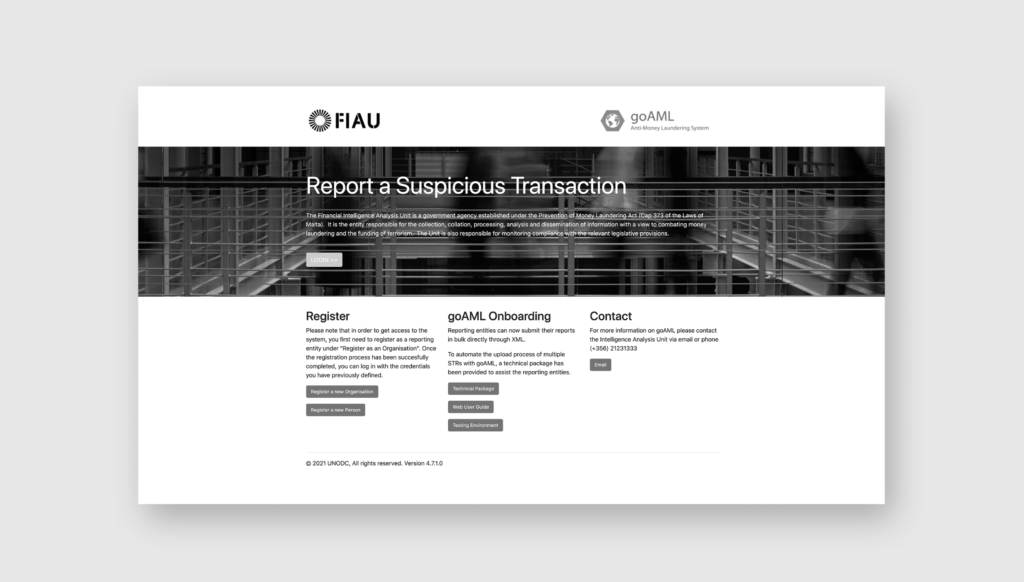
Empowering the FIAU with new systems
As part of the FIAU’s strategy, the Technology and Information Security Section worked to ensure that its internal processes are efficient, effective and secure. This was accomplished through the introduction of new systems that provided the FIAU and law enforcement authorities smarter tools to fight money laundering and the funding of terrorism.
2020 was an intensive year for the Technology and Information Security Section due to the introduction of two new core systems.
The FIAU has successfully commissioned and deployed the new Suspicious Transaction Reporting system, goAML, which is a custom-developed system by the United Nations Office on Drugs and Crime (UNODC) for all global FIUs.
goAML has provided a new web portal for subject persons and other entities to securely exchange information with the FIAU, whilst also providing a more robust backend system for our intelligence analysts to process the information and conduct their investigations.
The system drastically reduced the administrative effort in processing reports and allowed personnel to shift their effort to the analysis of reports and cases.
Further to this, the FIAU extended its systems with various data sources to validate and enrich the data within its database.
As part of the European 5th AMLD, Malta was obliged to implement a centralised registry wherein credit and financial institutions which provide accounts with IBAN numbers, offer safe custody services (SCSs) and safety deposit boxes (SDBs), are obliged to register this data.
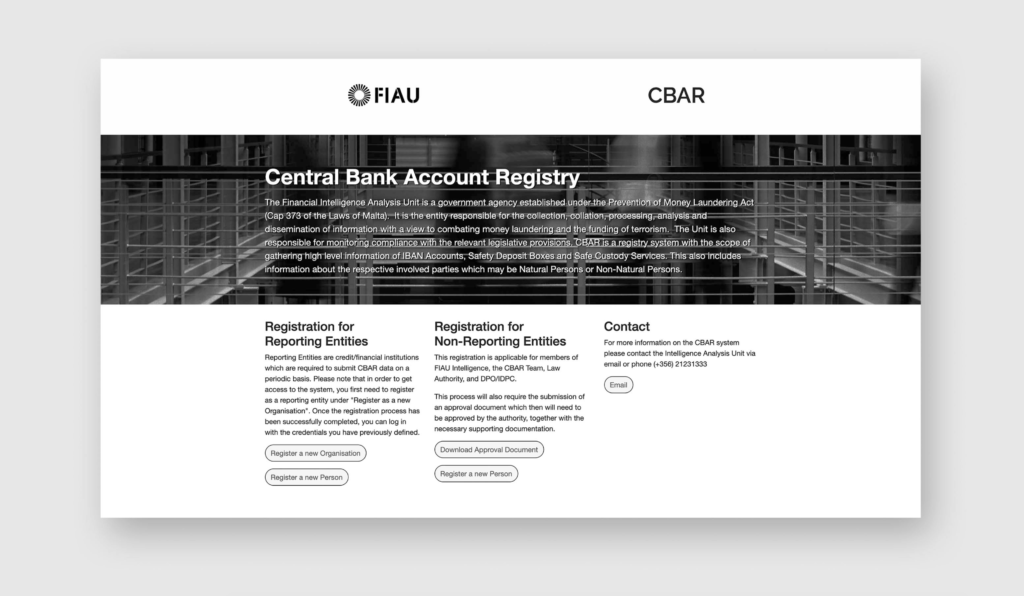
The FIAU embraced this new function, and immediately created a project team to develop the new Centralised Bank Account Registry (CBAR) system that securely collects bank account details from the credit and financial institutions in a standard account format. The CBAR project team worked intensively to formulate the system’s functional requirements and coordinated the development through a third party software development company. To ensure that the data provided is accurate and complete, the system has been configured with several data quality validation rules and reports. Due to the frequent updates received from the credit and financial institusions, the registry provides law enforcement authorities secure access to the full updated list of IBANs, SCSs and SDBs, whilst keeping control of the searches conducted and limiting searches to ongoing cases.
As part of the onboarding process, the FIAU organised various web meetings about both goAML and CBAR systems to ensure that subject persons were prepared for the launch of the new systems. During this time, the FIAU also worked on developing the CBAR section and its policies.
To ensure that the new tools, of goAML and CBAR, are used, the FIAU has invested in specialised training for both the technical and operational users. This training was also extended to the subject persons through the support channels, particularly in relation to integrating with XML and how to utilise the new web portal efficiently.
Due to these new data systems, it has also become possible to gather improved business intelligence. This allows for deeper and more valuable insights to be gained from the data collected. Importantly, such initiatives have also reduced the time and effort to provide the required reports, especially during ongoing assessments.
European collaboration
The FIAU has taken the initiative to form part of the advisory group for European FIUs and is contributing on a regular basis to the improvement of the data dissemination system used by European FIUs. Major administrative changes are currently being planned to this system whilst also ensuring the improvement of the system’s infrastructure and usability.
On the innovation front, the FIAU has joined a European working group to assist in the development of a new financial transaction monitoring system based on Artificial Intelligence. The project is an initiative from various international and national entities within financial services, the educational sector and government agencies that are ready to contribute to this exciting new project that will further leverage technology for AML/CFT.
Expansion of premises
Due to the ever-growing human resources requirements, a project team has been formed to plan and execute the transition of the FIAU’s operations to a larger head office. The established project team has been planning the new network and security measures within the new premises of the FIAU to ensure the highest level of security and redundancy for the FIAU’s operations.
Corporate Services & PPC
The main aims of the Corporate Services and PPC (People, Performance and Culture) section are to provide support services for the FIAU’s financial planning and management, human resources management, procurement and office management.
There are three main sub-sections within the Corporate Services and PPC, as outlined below.
Finance and Administration
The Finance Section is responsible for the FIAU’s administrative and financial requirements, including the preparation and management of accounting records, budgets and forecasts, preparation of reports as required by the Ministry for Finance and Employment and other Government departments, and co-ordination of responses to Parliamentary Questions.
The Finance Section is also in charge of the day-to-day administrative duties. These include the administration of correspondence, payment of invoices, management of supplies, supervision of contractual obligations with suppliers, making travel arrangements, and other administrative tasks, including liaising with external auditors.
Procurement
The Procurement Section is responsible for the purchase of supplies and services for the FIAU, overseeing the entire procurement cycle and ensuring that Public Procurement Regulations are adhered to. The main tasks include: the preparation and issuing of tenders and calls for quotations, vetting of procurement documents for supplies, services or works tenders, and preparing and/or assisting in the drafting and signing of contracts and other related documents.
Read more
People, Performance and Culture
The People, Performance and Culture, HR and Payroll Section oversees human resources and payroll. The main responsibilities of this section are to administer the recruitment process and issue employment contracts, compute payroll and manage attendance, co-ordinate induction training for new employees, and formulate and amend new policies related to HR. This section also takes care of the health and safety administration and training of staff on. Health and safety matters. In addition, the PPC also coordinates internal events, such as the quarterly reviews and team building events, which unfortunately due to Covid-19 had to be reduced to a bare minimum.
However, despite all the challenges, three key events were successfully organised:
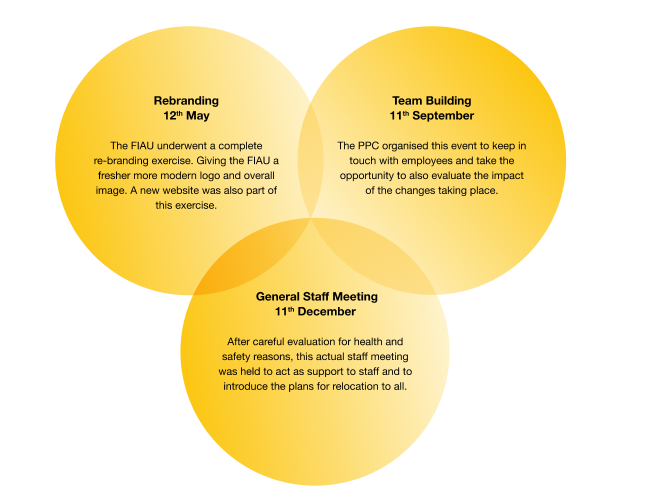


Projects concluded in 2020 by Corporate
Services 2020 was a year that saw a complete overhaul and rebranding of the FIAU’s corporate image. This exercise not only included new branding, all the way through from the logo to the colour schemes utilised in all FIAU materials, but also the setup of an entirely new website. Furthermore, the values already embraced by the FIAU as part of its intrinsic ethos were formalised and publicised, together with a mission statement.
Projects in progress by Corporate Services
The exponential growth in the staff component and the projection that it will continue to increase has necessitated the move to entirely new premises in the near future. The Corporate Services is part of the team entrusted with this herculean task, and is working closely with the Programme Manager, an entirely new role within the FIAU, and the designers to ensure that all staff and FIAU needs are met and that the transition happens as smoothly as possible on all possible levels. More about this project may be read in the Preview 2021 Section of this Annual Report Chapter 6.1.
Projects concluded in 2020 by People, Performance and Culture The FIAU experienced a significant growth in human resources, reaching a total of 98 employees by the end of the year, continuing the trend of 2019. This growth was necessary due to the increase in responsibilities and workload being experienced by the FIAU. This led to the introduction of new functions and to the segregation of teams and sections in order to develop specialisation and expertise in particular areas, such as Supervision, Enforcement and CBAR.
The FIAU is forecast to continue with its recruitment until the staff complement reaches 157 employees. The increase in HR was one of the recommendations that was made by the European Banking Authority (EBA), which had stated verbatim that:
“The FIAU should ensure that there are sufficient resources at its disposal in light of its tasks, the size and complexity of its sector, and the ML/TF risk level of obliged entities. The FIAU should take steps to ensure that its supervisory staff is equipped to implement and carry out risk-based supervision in an effective and consistent manner, including by providing staff with adequate training in line with paragraphs 50-53 of the risk-based supervision Guidelines”.
Guidelines are binding instruments issued by the EBA and therefore the FIAU had to consider an increase in resources to also ensure the correct application of the risk-based approach in line with the Anti-Money Laundering Directive (4th AMLD). This increase in staff was also recommended in the MONEYVAL Report in 2018, which clearly stated that the FIAU did not have the adequate resources to perform its duties. This recommendation was reiterated by other external evaluators, such as the International Monetary Fund (IMF) in 2019 and the Organisation for Economic Co-Operation and Development (OECD) in 2020.
Distribution of staff increment
Table 1
Supervision
+7 Employees
Intelligence Analysis
+5 Employees
Enforcement
+3 Employees
Corporate servuces and peaople, performance and culture
+3 Employees
CBAR
+2 Employees
Legal Affairs
+2 Employees
Directorate
+3 Employees
Technology and information security
+2 Employees
Quality assurance
+1 Employees
The sharp increase in the staff component led to different workplace needs, and challenges were met head on. To maintain a consistent workplace culture that promotes equality and fairness, and to help address the increased diversity in the team and the need to communicate more broadly, one of the measures taken was to develop a standardised staff handbook. The standards and procedures provided in the manual bring together employment and job-related information which employees need to know, this serving as employee guidance.
Due to the necessity of recruiting a substantial number of staff over a short period of time, the PPC embarked on a recruitment campaign to boost the process. Most vacancies within the FIAU require very particular qualities and specific skills set combined with experience. Therefore the net needs to be cast as widely as possible to ensure that the vacancies are filled both efficiently and effectively.
To further support the recruitment process, a Vacancy module was implemented on the FIAU’s website, together with guidance on the recruitment process and the facility to apply directly on-line.
Projects in progress by People, Performance and Culture
The increase in staff complement required better-supported HR practices. Therefore, a new HR application was sourced and tailored to the needs of the FIAU. This was targeted for launch in January 2021. This system also incorporated a new on-line performance appraisal system to be used for the first time in 2021, facilitating the management of staff leave, sick leave and other logistical matters.
The process of recruitment is ongoing therefore, additional tools supporting effective recruitment were taken on board, such as the use of personality testing.
Adjusting to a pandemic
Globally, the pandemic brought about various challenges, changing how we work, learn, and interact with each other. Covid-19 led to some form of hesitation and uncertainty. Work at the FIAU is by nature demanding and stressful. It was immediately acknowledged that continuing to work on-site during the pandemic was necessary but it would induce added stress. In view of this, the FIAU ensured that staff were made all the more aware of their psychological wellbeing and increased the support offered by HR through the availability of a psychologist to hold one-one sessions with whoever felt the need to do so.
Furthermore, the FIAU took several measures to safeguard employees’ health and well-being, including by providing the opportunity to get vaccinated with the flu vaccine. The FIAU continuously offered a safe environment by introducing several concepts and guidelines that had to be followed by the employees. The guidelines were being revised from time to time to be in line with those issued by the Health Authorities. Such measures included monitoring employees’ temperature at the door, installation of Perspex around all desks, the requirement to wear a face mask at the office at all times (with masks being freely provided), meetings held virtually, enhanced hygiene practices such as increased frequency of cleaning of common areas, the provision of hand sanitisers, and twice weekly sanitisation of all offices.
Whilst acknowledging the fact that our way of life has changed ,the PPC continuously encourages staff to stay positive and hope for a better future, and together with the social activity team organises small initiatives to boost morale and add some colour to our daily lives.
Staff training
Chart 1

Training to Staff
11 employees
Overseas
69 employees
Local
26 employees
On-site
64 employees
Online

Training Topics
ML/CFT
Business English
Business & Finance
Human Resources
Leadership & Management
Procurement
Public Speakin

Training Sponsors to staff (CAMS)
6 employees
MONEYVAL & Other Evaluations
Explanation of the MONEYVAL Mutual Evaluation Report Outcomes
In July 2019 the Council of Europe’s Committee of Experts on the Evaluation of Anti-Money Laundering Measures and the Financing of Terrorism (MONEYVAL) concluded an evaluation of Malta’s Anti-Money Laundering and Counter Funding of Terrorism Regime (AML/CFT) which culminated in the publication of the Mutual Evaluation Report (MER) in September 2019. This was the fifth time Malta had undergone such an evaluation process since 1998, with the last evaluation having been carried out in 2012. Under the revised evaluation methodology that was published by the FATF in 2013, jurisdictions are assessed against two main components: (i) the technical component i.e. the extent to which national AML/CFT laws, written policies and procedures adhere to the FATF 40 Recommendations, and (ii) the effectiveness component i.e. the competent authorities’ and private sector’s ability to effectively implement and put into practice the AML/CFT laws and obligations. Prior to the launch of the 2013 methodology the main focus of MONEYVAL and FATF evaluations was on the technical component with a limited effectiveness element. The 2018 - 2019 evaluation was the first time that Malta was assessed under the updated 2013 FATF methodology.
Distribution of Assessment Ratings for the 40 FATF Technical Recommendations
Table 1
Distribution of Assessment Ratings for the 11 Immediate Effectiveness Outcomes
Table 2
Supervisors need to better understand the risks, have the skills and capacity to act, and to incentivise the right behaviour. This means rec-ognising and rewarding activity that leads to the right outcomes”
Malta fared positively in international co-operation and in the implementation of preventative measures (i.e. financial sanctions) related to proliferation of weapons of mass destruction. On the other hand, Malta received low effectiveness ratings in the area of licensing and AML/CFT supervision, money laundering investigations, prosecutions and convictions, as well as for its ability to confiscate proceeds of crime.
Follow-up and progress achieved
On the conclusion of the evaluation process, Malta was placed in enhanced follow-up and requested to report back to the MONEYVAL Plenary in December 2020 (which deadline was postponed to April due to the Covid-19 pandemic). In view of the results obtained, Malta will also be reviewed by the FATF’s International Compliance Review Group (ICRG) which was meant to conclude its review in February 2021 (the date was eventually moved to June 2021 in view of the Covid-19 pandemic). This means that the progress made by Malta to address the deficiencies outlined in the MONEYVAL Malta MER will be monitored by both MONEYVAL and FATF. MONEYVAL will be focusing on the technical component and will assess whether Malta has remedied all the technical deficiencies identified for those 40 FATF Technical Recommendations that were rated Partially Compliant (i.e. 9 out of the 40 Technical Recommendations). FATF on the other hand will focus on the effectiveness component and will monitor the progress made by Malta to address the recommendations linked to those 9 Immediate Outcomes for which Malta obtained a Moderate or Low level of effectiveness.
Following the conclusion and publication of the Malta MER in 2019 the various Maltese competent authorities involved in combating ML/FT under the oversight of the National Co-ordinating Committee (NCC) on Combating Money Laundering and Funding of Terrorism devised and started implementing a detailed action plan to address the recommendation emanating from the MONEYVAL MER. The FIAU, having a central role in Malta’s AML/CFT framework, has a significant involvement in the implementation of the MONEYVAL recommendations. However, the implementation of these actions is a concerted effort which sees the involvement of various other national authorities besides the FIAU.
Actions to address the deficiencies linked to the Technical Recommendations
The FIAU was responsible for addressing 5 (out of a total 9) Technical Recommendations that were rated as Partially Compliant. These deficiencies were addressed through amendments to the Prevention of Money Laundering Act (PMLA) and the Prevention of Money Laundeing and Financing of Terrorism Regulation (PMLFTR) which entered into force in February and May 2020 respectively, and also through changes to the FIAU Implementing Procedures Part I that were implemented in July 2019 and September 2020. Apart from legislative changes the FIAU also overhauled its supervisory and enforcement framework, introducing new policies, procedures and systems that enhanced the FIAU’s understanding of ML/FT risks and enabled the implementation of more effective risk-based supervision. Apart from addressing the technical deficiencies identified in relation to Partially Compliant FATF Recommendations, the FIAU also sought to address deficiencies noted in other Recommendations that were rated as Largely Compliant.
In October 2020 Malta submitted a report to MONEYVAL highlighting the progress made to address the technical deficiencies. A decision by MONEYVAL on whether sufficient progress has been made to upgrade the 9 Partially Compliant Recommendations and a number of other Largely Compliant Recommendations (in respect of which Malta voluntarily requested an upgrade), is expected at the MONEYVAL April 2021 Plenary.
Actions to address the recommended actions linked to the Effectiveness Assessment
As explained above, Malta was expected to implement the recommended actions that were made in respect of 9 (out of the total 11) Immediate Outcomes in which Malta had achieved a Moderate or Low level of Effectiveness. The FIAU was heavily involved in the implementation of recommended actions linked to Immediate Outcomes 1, 3, 4 and 6 and to a lesser extent in the implementation of those related to Immediate Outcomes 5 and 9.
The FIAU demonstrated a strong commitment to address the recommended actions and to improve its operations, which commitment is evident from the volume and extent of changes that the FIAU managed to implement over a relatively short period of time. The below is a list of some of the major enhancements carried out and which address the MONEYVAL recommended actions falling under the FIAU’s remit: A significant boost in human resources – With the FIAU growing from 43 employees (at the time of MONEYVAL’s on-site mission in 2018) to 98 employees by the end of 2020, and with prospects to grow even further to 157 employees by end of 2021. Increased investment in technical resources – With investment in systems such as the CASPAR Risk System, goAML Intelligence Database and various analytical tools, amongst others.
A restructuring of the Unit and the creation of new and specialised teams – Including the setting up of sector-dedicated Supervisory Teams, a Guidance and Outreach Team, a Strategic Analysis Team, an Intelligence Process and Prioritisation Team and a Policy, Strategy and Quality Assurance Team.
An overhaul of the Risk Assessment Process –Involving the launch of the CASPAR Risk System and Sector-Specific Risk Evaluation Questionnaires which provide the FIAU with an extensive risk understanding to improve its risk-based supervision.
Adoption of a new Supervisory Strategy - Which ensures that the frequency and intensity of AML/CFT supervision is driven by ML/FT risks, which strategy started being implemented in July 2019.
Significant increase in the number of AML/CFT visits carried out - Under the July 2019 – June 2020 annual cycle 167 examinations and 28 supervisory meetings (targeting low risk entities) were carried out. This is a stark increase over 2018
(59 examinations) and 2017 (67 examinations). 75 examinations took place until December 2020. The current cycle covers July 2020 to June 2021.
Enhanced cooperation with the Sanctions Monitoring Board (SMB) in supervising Targeted Financial Sanctions (TFS) obligations - Following the conclusion of an MoU with the SMB (in late 2018), in 2020, 128 findings letters were sent to the board detailing outcomes of visits that assessed TFS obligations.
Enhancements to the FIAU’s Enforcement Processes
– Revision and introduction of the sanction policies and tools that assist the FIAU in determining the most proportionate, dissuasive and effective sanction when breaches of AML/CFT obligations are identified.
Revised sanctions’ publication measures – To enable the FIAU to publish more information on sanctions imposed
Increased enforcement action taken by the FIAU –Administrative penalties - €991,730 (imposed in 2018),€3,932,801 (imposed in 2019) and €4,651,311 (imposed in 2020). 30 directives to take remedial actions were issued in 2020.
Reduction in timeframes to analyse Suspicious Transaction Reports (STRs) – From 359 days at the time of the MONEYVAL on-site mission to 98 days at the end of December 2020.
Gained access to additional databases - Some of which have been automatically linked to the goAML analytical system.
Increases in STR reporting and quality – STRs received increased from 1,679 in 2018 to 5,090 in 2020.
Enhanced cooperation with Commissioner for Revenue (CFR) on tax evasion cases - Over three years, over 580 reports on tax evasion suspicions were disseminated to the CFR. The assessment of some of these cases has so far led to the recovery of €8 million in evaded taxes, administrative fees and charges.
Conducted a significant number of strategic analyses
– Following the setting up of a dedicated team to carry out
strategic analyses, 8 types of strategic analysis were carried out in 2020, about the following topics:
1. foreign proceeds of crime
2. cash
3. tax evasion and corruption
4. remote gaming
5. remote gaming ML Trend 1
6. remote gaming ML Trend 2
7. cross border cash declarations
8. money remitters
Set up task forces - These are set up with other law enforcement authorities to facilitate the use of intelligence in high-profile ML and FT cases.
Set up a Centralised Bank and Payment Account Register (CBAR) - The CBAR system which retains information on holders and beneficial owners of bank and payment accounts held with Maltese credit and financial institutions officially went live in October 2020.
Set up a team focusing on the provision of guidance and training to the private sector – Since its inception in late 2019 this team has issued a revised version of the FIAU Implementing Procedures Part 1, published 9 other sector-specific or thematic guidance documents, and organised 10 webinars on sector-specific or thematic topics of AML/CFT relevance.
Introduction and delivery of AML/CFT modules in various university courses – Since 2019 the FIAU has been delivering lectures throughout the law, criminology, economics, management and accountancy courses and the blockchain and DLT Course.
Set up or participated in various newly created public-private partnership platforms – such as the AML/CFT Consultants Forum, the Finance Malta Banking Sub-committee, and the Financial Reports (FINREP) Committee, besides the Joint Committee for the Prevention of Money Laundering and Funding of Terrorism which has been established for a number of years.
Malta is expected to report to the FATF on the progress it has made in March 2021, and a final decision on whether such progress is considered sufficient or otherwise will be taken at the FATF Plenary in June 2021. Malta is expected to demonstrate progress in addressing all recommended actions linked to those 9 Immediate Outcomes that were rated moderate or low to avoid featuring in the FATF’s list of jurisdictions having strategic AML/CFT deficiencies.
EU Commission’s Evaluation on the Implementation of the EU Fourth Anti-Money Laundering Directive (4th AMLD)
In 2020 Malta was evaluated on the implementation of the 4th AMLD by Council of Europe experts who were tasked by the EU Commission. The evaluation of Malta is part of a wider assessment that is being carried out by the EU Commission to determine the extent of the application in practice of the 4th AMLD requirements across all Member States. The purpose of this evaluation was not only to assess the legal transposition of the 4th AMLD requirements, but also to evaluate the effective implementation of those requirements.
The evaluation focused on a number of aspects which included the legal transposition of 4th AMLD requirements, the implementation of AML/CFT preventative measures by private sector entities envisaged under the 4th AMLD by private sector entities, the effectiveness of licensing and authorisation processes for financial institutions and DNFBPs, the AML/CFT supervisory and enforcement regime, the transparency of beneficial ownership information on legal entities and arrangements, and the receipt and analysis of STRs and other intelligence by the FIAU and the FIAU’s cooperation and sharing of financial intelligence with local competent authorities and foreign counterpart FIUs.
Throughout the evaluation process various Maltese authorities, including the FIAU, were required to reply to a questionnaire providing information on the legal transposition of the 4th AMLD and information on operational processes and procedures, as well as detailed statistical data on a number of aspects. The submission of these questionnaires and statistical data was followed by a number of online meetings that were carried out over a week in October, during which Council of Europe - appointed experts met with and interviewed Maltese authorities’ officials as well as representatives of private sector entities.
The EU Commission is expected to publish a comprehensive report about the state of play of the implementation of the 4th AMLD across the entire European Union in the near future once all Member States have been evaluated.
Recruitment & RelocatioN

Earlier on in this report, in the Corporate and People Performance and Culture section, the need for an increased staff complement was highlighted. The decision to increase human resources was based on the recommendations made by the European Banking Authority, MONEYVAL, the International Monetary Fund and the Organisation for Economic Co-operation and Development. The FIAU has since been recruiting talented human resources through improved and updated recruitment practices and a rigorous selection process. The staff complement has risen from 43 in November 2018 to 98 in December 2020. The projections are that by the end of 2021 the FIAU will be home to 157 employees spread across all sections and roles within the Unit. This increase aims to ensure that the Unit has the necessary resources to effectively perform all the functions entrusted to it, as set out and overviewed in this annual report.
The Government has increased FIAU budgets year on year to reflect the needs of a growing entity. The necessary funds were made available to acquire the resources required for the FIAU to carry out the functions assigned to it. Funds have been applied to strengthen all aspects of the FIAU’s operations, with particular attention to intelligence analysis, supervision, and guidance and outreach. Significant allocations have and will continue to be made for the recently assigned management of CBAR and the implementation of the new cash restriction regulations. This shows a commitment by the Government to ensure a functioning and effective FIAU in line with the requirements of the European Union Anti-Money Laundering Directives and other applicable international standards.
With a growing team, it became evident that the FIAU would soon outgrow its current offices. With a vision to address this, a call for expression of interest for the provision of new premises was issued in early 2020. Following a selection process, this was awarded to Trident Park Limited in July 2020. The new offices will be located within the Trident Park office campus which is being developed on the historic site of the former Farsons Brewery within the Central Business District in Mrieħel. The state-of-the-art building is designed with environmental sustainability in mind and projected to achieve BREEAM Excellent certification. The building aims to optimise natural lighting and will use an innovative climate control system to reduce the carbon footprint of the building and therefore even that of the FIAU.
The FIAU’s relocation is driven by its HR plan for 2021 and beyond. It will significantly increase the office space to accommodate the increased staff complement and the necessary infrastructure required to service a larger organisation. The new offices will cover 3,000 square meters and will not only accommodate the 157 staff projected by end 2021 but also future staff requirements. Various facilities to service FIAU staff and stakeholders will also be available.
This project, which is being managed by the FIAU’s Programme Manager in collaboration with various sections within the FIAU, will ensure that all the necessary requirements for the FIAU to function effectively are accommodated.
Read more
Use of Cash
(Restrictions) Regulations
In the 2019 Annual Report it was reported that the Government of Malta had issued a policy to restrict the use of cash for the purchase of certain high value items. The FIAU was asked to assist with the drafting of the necessary legislation, and in 2020, the Unitwas also vested with the power to monitor compliance with the eventual piece of legislation which is now legally called, the Use of Cash (Restriction) Regulations. Whilst this legislation is not a result of EU law, most countries have legislated in restricting the use of cash to help support the fight against AML/CFT. Malta still has a high use of cash for purchases. The need for more control was recognised, particularly for high-value goods, and this following feedback from various international bodies. Using cash for large or expensive purchases, purchases is one of the oldest routes for laundering funds raised from illicit activities (such as drug trafficking and tax evasion). It is particularly easy to transfer items like jewelery, precious stones or luxury items across boarders. To be either sold to convert back to cash or gifted and the illicit money trail is lost.
On the 10th March 2020, Legal Notice 81 of 2021 was published on the Government Gazette, bringing into force the Use of Cash (Restriction) Regulations (Subsidiary Legislation 373.04). Now that the law in in place and in force, the FIAU is building the necessary team to ensure that these regulations are supervised and enforced accordingly.
The most important key points of the regulations are: The prohibition of making and receiving payments or carrying out transactions in cash amounting to, or exceeding Euro10,000, when purchasing or selling the below high-value goods:
· Immovable property
· Antiques
· Jewellery, precious metals, precious stones and pearls
· Motor-vehicles
· Sea-craft; and
· Works of art
The limit for use of cash when purchasing or selling the aforementioned goods is therefore, €9,999.99.